
- Home
- Cat Health
Is Pet Insurance for Cats Worth the Cost?
Pet insurance policies can be just what you need, but sometimes, it is difficult to justify the cost until you have a significant amount to pay for an emergency procedure. When you consider pet insurance for a cat, the question remains as to whether or not the cost is worth it. The answer is, it depends on your needs, the age of your cat, the premiums you can afford to pay, and if you can handle a significant vet-related expense.
The Way Pet Insurance Works
A good pet insurance policy is going to be similar to a human policy. You have deductibles, monthly premiums, co-pays, and costs for medications. With pet insurance policies, the difference is the way bills get paid. Typically, vet bills have to be completely paid for at the time of service, and then you request reimbursement for the service.
The cost for the policy depends on your cat’s breed, age, expected cost of vet care for your area, and the options you choose. Some policies have coverage for major procedures in addition to the possibility of adding wellness coverage for an extra fee.
Other companies also only pay for coverage after your deductible is met based on your annual maximum. Some companies don’t have a maximum, but you can expect to pay more in premiums for that type of availability. If your cat has any pre-existing conditions, they likely won’t be covered. It’s better for your cat if diagnosis happens after having insurance to make sure they stay covered.
Selecting Your Pet’s Coverage
Like all health insurance policies, pet insurance is available in different tiers. The top levels will include accidents, illness, and wellness. Mid-tier policies may only cover accidents or illnesses. Bottom-tier policies tend only to offer coverage for accidents or emergency issues.
When you select a pet insurance policy, you are guessing at what you might need based on what you can afford. Consider the possibility of the worst-case scenario—a chronic illness with expensive treatment and follow-up care. Can you afford to pay several thousand dollars for surgeries or other unexpected vet bills? If not, then a pet insurance policy for your cat could be an excellent choice.
As you decide what company to use for your cat’s insurance policy, see if the companies you are considering have policies you can read ahead of time. Look for limitations, exclusions, expected co-pays, and deductibles. You may find that one company offers wellness coverage for a lower amount compared to a different one, and that may be enough to sway your decision.
The Best Time to Buy Pet Insurance
The best time to buy your cat’s insurance policy is as soon as you bring your furry friend home. Most people think that if a pet is young and healthy, an insurance policy isn’t necessary. While it’s true that your kitten may not need insurance for the next year or more, consider the alternative. If your cat gets out and gets hit by a car, a vet can be its only hope for survival. Now you have high vet bills to look at. Without insurance, you could go broke dealing with the aftermath.
The thing is that accidents happen when you least expect them, so it’s best to have insurance as soon as you can. You have no way of knowing when your beloved cat will jump wrong and tear an ACL or need unexpected dental treatment. It could happen a lot sooner than you think.
Pet Insurance for Your Cat Is Worth It
Most wouldn’t look at health insurance as something optional that you don’t want to pay for because you might never use it. Pet insurance deserves the same approach. Select the coverage you want after you compare insurance policies from different companies. If you have a pet, getting insurance sooner than later is the best option. If you’re thinking about adopting a pet, get insurance in order before you bring your fur-baby home.
6 Common Parasites And How To Prevent Them
Parasites are organisms that thrive on feeding off animals and people. There are many different types of parasites affecting humans and creatures alike, but this article focuses on some of the most common ones.
Here are parasites you may encounter if you’re not careful as well as a few simple yet effective ways you can steer clear of them:
1. Lice
Lice are tiny insects that feed on human and animal blood. They spread by crawling from one person or animal to another. There are three common types of lice: body lice, head lice, and pubic lice. Of the three, head lice are disease-causing, while the other two will just suck your blood and cause uncomfortable itching.
As suggested by their names, head lice normally target the head, while body lice roam around your body. And yes, pubic lice target the pubic areas. Since human lice are different from dog and cat lice, being in close contact with a person infested with lice could lead you to catch them. However, you can’t get lice from your pets and vice versa.
How To Prevent Lice
The easiest way to prevent lice is by practicing good hygiene. Using shampoos and other over-the-counter medicines could also help reduce the biting and itching. If you own pets, you have to keep them clean to avoid lice attacks. Other ways of preventing lice are as follows:
- Avoid head-to-head contact.
- Avoid sharing clothes.
- Don’t share combs, hairbrushes, and towels.
- Regularly vacuum your home.

2. Fleas
Fleas are common parasites that feed on blood. Like lice, they’re common on animals like cats and dogs. The fur in animals provides the perfect habitat for fleas, but they can also be a nuisance to humans. Unlike lice that only crawl, fleas can spring from one victim to another. They say lice can only live for one day without a host, but fleas can go up to 100 days.
The most common flea species in America is said to be the cat flea. Although they normally attack cats, they could affect humans too. Their bites on humans usually leave red, itchy spots that are clustered in threes. The bites may also cause hives, rash, or swelling around the bite area.
How To Prevent Fleas
To prevent fleas from infecting you, you could try the following:
- Keep your pet clean and hygienic.
- Limit your pet’s outdoor time.
- Bathe your pet frequently.
- Inspect and examine your pets for fleas regularly.
- Take measures like putting a check it out here on your cats.
3. Bedbugs
Bedbugs are small, flat insects that love to live with people and pets. They find furniture, mattresses, and wallpaper cozy as hiding and nesting spots. These repulsive parasites typically come out and feed while you’re asleep at night. They feast on human and animal blood.
Bedbugs normally don’t cause or carry disease, but they can lead to unpleasant irritations like itchiness and allergic reactions when they bite.
How To Prevent Bedbugs
These are a few easy ways to prevent bedbugs:
- Check any secondhand furniture for any signs of infestation.
- Use protective bedcovers to reduce the chance of mattress infestation.
- Avoid clutter in your home to reduce possible hiding places.
- Vacuum your home every now and then.
- Always be vigilant when you check into hotels or sleep in new places. Bedbugs are great hitchhikers.
4. Mites
Scabies is caused by a mite that bites and lays eggs into your skin. The scabies parasite is transmitted through skin contact with an infected person. It commonly causes itching at night, crusty patches on the skin, rash, and skin sores. Scabies can be treated with scabicide, a prescription medication.
How To Prevent Scabies
Scabies is said to also be a result of poor personal hygiene, so the best way to avoid it is by practicing cleanliness. You can try these tips as well:
- Avoid skin contact with infected people.
- Avoid wearing clothes belonging to an infected person.
- Do your laundry on time.
- Regularly change your bedding.
5. Pork Tapeworms
These are parasites found in pigs and people. If you eat raw or undercooked pork, you risk ingesting this pesky parasite. Pork tapeworms are said to mainly infect the intestines and the brain. They normally lay eggs that can be transmitted to others through feces and or ingestion of uncooked meat.
Tapeworms can feed on the food you eat, thereby stealing some of the nutrients you’re meant to benefit from it. These parasites can also cause massive headaches and seizures when they infect the brain. They can be treated through medication in some cases, but your body usually resolves the infestation on its own. In worst-case scenarios, surgery might be required to get rid of them.
How To Prevent Tapeworms
The best way to prevent pork tapeworms is by cooking or freezing meat to kill the parasite’s eggs. Here are a few tips on keeping safe:
- Avoid eating raw or undercooked meat.
- Freeze meat for at least a week in the freezer before cooking it.
- Freeze fish for at least a day before cooking it.
- Practice good hygiene.
6. Roundworms
Roundworms are small parasites that like to live in the digestive system of humans and animals. They thrive in areas with poor hygiene and sanitation. There are many different types of roundworms, but the common ones that infect humans are pinworms and ascariasis.
Roundworms can be harmful, causing problems like fever and diarrhea. They require a body to live in so they can mature into egg-laying adults. When they lay eggs in your body, the eggs are said to live in the stool, so when you poop, the eggs can end up in the soil, where they pose a risk of infecting other people or animals.
How To Prevent Roundworms
Although there are many types of roundworms, you can prevent them by doing the following:
- Clean up your pet poop.
- Take your pet to the vet for deworming.
- Make sure your children don’t ingest soil or play near poop.
- Exercise proper hygiene such as handwashing.
- Wash fruits and vegetables thoroughly.
- Avoid eating raw meat.
- In areas with poor sanitation, drink only bottled water.
To Sum It Up
Parasites are organisms that cause many different problems for their hosts, including discomfort and diseases. As mentioned, the best way to prevent parasitic infection is by practicing good personal hygiene. If you have pets around the house, see to it that they’re always clean and well groomed. Use things like DEWELPRO and other similar products to keep parasites at bay.
Snowshoe Cat Price Range – What to Expect When Buying Snowshoe Cats?
Before getting to know the Snowshoe Cat price range, do you know that the breed loves company? This explains why they’re the happiest around family members, this includes children of course. To be honest, all cats are like that but then there are surely some who simply DISLIKE being alone for too long a.k.a. Snowshoe.
It’s a very intelligent breed with the ability to work its paws like no other feline. Meaning look forward to your pet cat opening doors, actually enjoying bath time, and more things like that. No doubt, they have a very loving nature and are quick to learn simple tricks.
So let’s get to know more about these cute little creatures that you’re considering to make a part of your home…
Overview of Snowshoe Cats
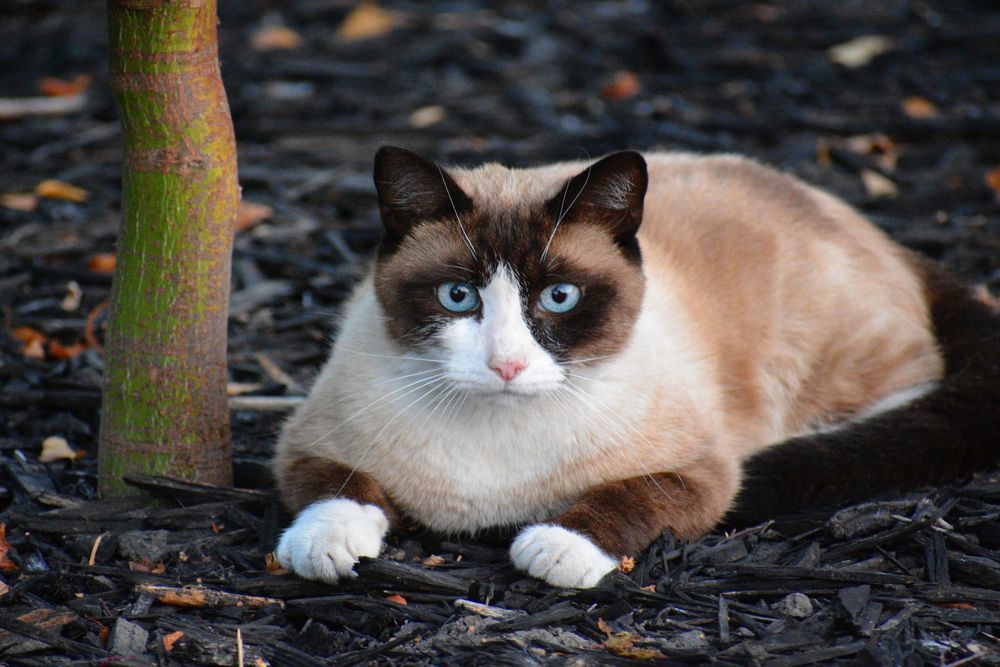
It’s a domestic breed that originated comparatively more recently, that is during the 1960s. A breeder of Siamese cats is responsible for the accidental birth of this particular breed. They’ve been around for only over 40-50 years now and still the original coat markings are very rare to come across.
Snowshoe cats have a moderately-sized oriental body type. The appearance, no doubt, is much the same as Siamese cats. But Snowshoe is longer rather than being tall. Their build is athletic, well-balanced, and muscular. Needless to say, male Snowshoe cats are larger in comparison to their female counterparts. The former being 10-12 pounds.
Triangular head shape and medium or medium-large ear size with tips that are slightly rounded. Along with a tail of medium size.
As for the color, the short-hair coat of Snowshoe felines is white and solid-colored. The ears, face, tail, and also legs sometimes are solid black in color. The white color patterns have variations along the face, paws, chest, and stomach.
But the whole body is evenly colored with subtle shading or point coloring around the hips, shoulders, and back. Lighter shades are often found near the stomach and chest.
Then the paw pads are flesh-toned, point-colored, white, or just mottled. It goes without saying that paw color tends to darken as the cat grows older. They can even turn chocolate brown due to aging.
And in the case of purebred Snowshoe cats, blue eyes are a huge attraction. But you know, if you’re a genuine animal lover, blue eyes or black, how does any of this matter, right?
Snowshoe Cat Price Range

Limited Registration
Obviously, cats and dogs that are not completely registered with organizations like the AKC aren’t expensive. After all, registration and certifications do cost a certain sum of money. So you can get a Snowshoe kitten for anywhere between $300 and $500 this way.
Full Registration
Complete registration means access to more information. Also, fully registered cats you can breed as long as you know the wherewithal of proper breeding. In this case, however, prices vary quite a lot based on what type of breeder it is, the pedigree or lineage of the cat, and the like.
There are low-cost breeders that charge anywhere between $500 and $800 per kitten. But please beware of backyard breeders. These could be reputable, well-known breeders too who normally charge $800 to $1,200 per kitten.
You Can Also Adopt Of Course!
Adopt A Pet is a very useful platform specifically made for genuine animal lovers who find the concept of this breeding “business” or “trade” very tricky. So instead they adopt, which means making one less cat homeless. Plus, it’s way more affordable than buying from a breeder, any breeder.
But Are Snowshoe Cats Suitable for Family Homes?

One thing can be said for certain that Snowshoe cats are extremely loving and friendly. So it’s no problem at all for them to become acquainted and also have a good time with family members. After all, the breed loves company, irrespective of how old or what gender.
Snowshoes are plenty playful even when they get older. They’re also quite active, which means being around energetic, playful children is sure to bring out the best in them.
However, you have to make sure that kids treat the cat with respect. It’s very, very important to teach young minds to be more caring and loving toward cats (or any other animal as a matter of fact) for the benefit of both. Leaving the cat feeling distressed or harassed is not funny, just like it isn’t fun for your child to get scratched by the cat as a result of the animal defending itself.
Moving on, Snowshoes also interact with strangers unhesitatingly. So you can entertain as many guests at your house as you wish and not worry about your feline being unfriendly or anti-social.
What About Other Pets, How Does A Snowshoe Cat Get Along With Them?

Does the friendly nature of Snowshoes extend to animals too? Well, to be honest, any domesticated animal can get along with any other domesticated animal as long as you understand each one’s limits. Along with knowing how to train them to be around each other.
As for Snowshoes, your cat will definitely feel a lot more active and happier with a fellow Snowshoe. Two cats are perfect for giving each other the company that both crave. Just introduce them slowly and calmly. In that case, even dogs are not difficult for Snowshoe cats to get along with.
One Last Time – What Is the Snowshoe Cat Price Range?
You can buy one from a reliable, humane professional breeder for anywhere between $800 and $1,200. As for adoption, this is much more affordable of course. Plus, the whole idea of paying just $300 and making one less cat homeless feels like a very rewarding experience.
The price with breeders, however, varies a great deal depending on factors like age, coat color, gender, size, etc. But you should know that all Snowshoe Siamese cats are born white. And then during the first few years develop darker markings. So it’s only natural for the developed colors to differ from one to kitty to another.
British Shorthair Price Range – All You Need to Know About the Breed and Breeders
When it comes to cats or dogs, to-be pet owners have plenty of questions to ask. So how about I answer the ones related to the British Shorthair price range? In this post, there’s everything you might want to know about buying or adopting this low-maintenance, pedigree cat.
Generally, unregistered breeders charge more than registered breeders. Either way, let’s find out the cost and some additional, relevant information with regards to becoming a cat parent to an easygoing, placid, loving, and loyal British Shorthair.
British Shorthair Price Range – How Much to Pay?

It obviously depends on multiple factors, which include the kitten’s characteristics, what type of breeder you’re buying from, etc. But on average, with a reputable, professional breeder, the cost is no less than 1,200 British Pounds i.e. around $1,700. And if it’s a purebred kitten, then the cost can reach up to 2,000 British Pounds even.
It’s only natural to assume that rare color combinations, more often than not, are more expensive. So if you’re a budget-conscious person, this is certainly a very high price to pay, literally.
But a cheaper, more affordable alternative is getting the cat from someone you know. Meaning a friend, family member, or maybe just an acquaintance who can no longer look after the cat, for whatever reasons. So you can volunteer to re-home the little feline while also fulfilling your desire of getting a beautiful British Shorthair.
Or you could also go for a British Shorthair crossbreed. They too are loving and simply fantastic to have as pets. And the best part is that these cats, since they’re not purebred, are inexpensive to buy.
Now in comparison to some of the other exotic cat breeds, British Shortahit isn’t exactly the most expensive option. On the contrary, it’s not that expensive. So keeping this in mind, the price tag doesn’t seem so unreasonable anymore.
British Shorthair Price Range – But Why Charge So Much?
As mentioned in the introduction above, registered breeders tend to charge extra. But why do you think that is? Simply because of the high demand. Because of the fact that many people are willing to pay more money, even if that means spending over a thousand British pounds.
But then I’m not trying to make registered breeders look bad or anything of the sort. There’s a lot of care and special attention that’s involved in running and maintaining a cattery. This kind of service is highly specialized and complex of course.
Just the process of registration, which is not the same in every region or country by the way, is very difficult and not cheap at all. Plus, the breeding standards are high (as they should be) to make sure that the cats are healthy. Then there’s the whole aspect of pedigree too that organizations are very stringent about with regards to their certification guidelines.
So when viewed through that lens, the higher cost starts to look reasonable. You obviously want a good, reliable, and trustworthy breeder who you know cares for the animals and isn’t just making HUGE profits out of you.
These kinds of breeders actually prioritize the health of the kittens through vaccinations, medical check-ups, spaying/neutering, and the like. And this, needless to say, costs them money. So you can get a cat companion that’s well-socialized and healthy with no medical or heredity conditions.
British Shorthair Price Range – What About Unregistered Backyard Breeders?
Would you trust an unregistered daycare center for babies? Of course not, right? So then why does it have to be any different with cats, dogs, and other pets!
Backyard breeders should NEVER be your first choice or any choice at all. And here’s why.
Imagine this – breeders simply want the cats in their prime of life to breed and over-breed. That’s the sole purpose of these poor little creatures who are usually kept in cages. They’re forced to breed one litter after another and then simply just thrown out once their “services” have been rendered.
Then let’s move on to the litter. These young kitties don’t get the maternal care and attention they absolutely need to develop social skills. On top of that, their needs are neglected and some are even subjected to rough use and handling.
To be honest, this isn’t even a scratch on the surface of the whole unfortunate scene of “backyard breeding.”
British Shorthair Price Range – So Why Not Adopt Instead!

The chances are you may not find a purebred British Shorthair for adoption. Your choices here do indeed become limited with regards to age, gender, color, etc. But then you can ask to be placed on the waiting list or something like that.
The best part about adoption, apart from the fact that you’re going to go back home with a homeless cat, is that it’s cheap and affordable. You never pay the price that breeders often charge. In fact, you end up paying one-third of the price at the most.
Find a British Shorthair on Adopt A Pet right now!
Overall Living Expenses of British Shorthair
Purchasing/adopting the cat is just the initial expense, right? What about the ongoing costs of feeding, vet visits, health check-ups, etc.?
First of all, these cats live for 14-20 years on average. So for those many years, expect to pay the following as the little feline’s regular expenses…
- A 16-pound bag of dry cat food is around $37.
- 24 wet cat food cans cost roughly $20-$25.
- As for raw meat, like chicken breast for example, that’s $10 every month.
What about vet visits and basic medical procedures?
- Vaccinations cost $154.
- Spaying/neutering costs anywhere between $30 and $50.
- Dental X-Ray is between $50 and $60.
- DNA tests – $48.
- Cardiac tests – between $550 and $750.
- Ultrasound costs $60.
Needless to say, you also have to buy things like water/food bowls, toys, nail clipper, hairbrush, shampoo, etc. And then also comes the cost of treating potential medical conditions, such as Polycystic Kidney Disease that is quite common among the British Shorthair breed.
Conclusion
They’re great companions to have and are incredibly pleasant to be around. British Shorthair is an easygoing cat that doesn’t necessarily demand hourly attention. Plus, the breed is loving, fierce, loyal, and very affectionate toward those he/she grows fond of. But then they can be expensive to buy if you’re opting for a professional breeder.
You can choose to adopt instead in case you don’t have that kind of money to spend. Or if you’re just too repulsed by the whole idea of the tricky business of pet breeding.
How to Soften Dry Cat Food – Some Important Tips You Need to Know
Soft dry cat food is easier for your cat to swallow and digest. Especially when your cat is used to eating moist foods since kitten-hood. You can make the most of how to soften dry cat food when your cat is slowly getting to eat other foods than plain milk.
So without taking up too much of your time, let’s learn how to soften dry cat food the right way. Also, in this article, you’ll discover some tips you can use to improve your cat’s eating habits. When it comes to mixing water with dry cat food to make it softer, rely on the following information.
Ways of Softening Cat Food
1. Add warm water
This is the most basic method of softening dry cat food. Soaking dry cat food in warm water for 10 minutes. It’s quick and effective.
For every 1 cup of dry food kibble, add 1/3 cup of warm water.
There are different ways in which you can make dry cat food soft. You can also make it slightly chewable, creamy, soupy, or mashed.
This depends on how long you soak the kibbles. You can soak the dry food kibbles for anywhere between 5 to 15 minutes.
How you soften dry cat food for your cat depends on your cat’s needs and health. If it’s for a weaning cat, making the food creamy and soupy is necessary. This is the only way you can make the dry cat food palatable for a kitten just getting off weaning.
Once your kitten is used to the flavor and texture of the softened dry cat food, you can reduce the soaking time.
2. Add kitten formula
Adult cats and kittens love kitten formula. It’s delicious, aromatic, and nutritious. The nutritional quality of kitten formula is the best boost a cat can eat with their dry kibble food.
But before you set up a routine of adding kitten formula to your cat’s diet, consult with a vet first. Ask the doctor about your cat’s nutritional needs based on age, weight, and health conditions.
Once you know it’s safe to feed your cat kitten formula, switch warm water with it.
The dry cat food will soak up all the moisture of the kitten formula easily. The kibbles will develop a creamier texture because of the formula. Making it even more palatable and tempting for your cat to eat.
If your cat is suffering from chewing difficulties, this is a great way to solve that. You can even blend or mash the kitten formula together. It’ll make the texture of the kibbles smoother and creamier.
Weaning kittens, fussy cats, and cats who have a lack of appetite. Kitten formula adds a boost of flavor and smell that will make it hard to resist for cats.
Some Tips Before You Go…
Here are some dos and don’ts of feeding your cat softened dry cat food…
1. Always feed fresh food

If the softened dry cat food has been sitting out for over an hour, do not feed it to your cat. While it’s okay to store un-softened dry cat food in an airtight container for days, you shouldn’t do the same with softened food.
The change in temperature when you add warm water or kitten formula will cause bad bacterial growth. This is dangerous when your cat eats it.
Dry cat food is processed in high temperatures to kill away germs for proper packaging and long-term storage. However, when you add warm water to it, it activates the bacteria that grow on the surface of the kibbles. So don’t be surprised if the untouched bowl of softened dry food starts to stink and attract flies.
2. Always measure before adding water

There’s no room for guesswork here. If you add too much water, your cat will end up consuming more water than nutrients.
Use a spoon or a cup to get the accurate serving size of water, kitten formula, and dry cat food. It should be easier for you to feed your cat daily. And this way, you can also keep track of how much water your cat is consuming. And how much to maintain a proper body weight.
3. Always consult a vet before changing your cat’s diet
Your cat may have allergies or stomach sensitivities that you are not aware of. That is why consulting with a professional first will help you figure out the best diet for your pet. Whether that includes feeding softened dry cat food or wet food that contains more nutrients and fewer carbs than dry kibbles.
Before making any changes to your cat’s diet, you should know about your cat’s health conditions. Any kind of experimentation with food may harm your cat and you won’t even know it!
4. Switch to wet food if you’re still unsure

Is your cat not eating softened dry kibbles? Maybe it’s time to switch to wet food. Wet cat food smells because it doesn’t contain any rice or wheat. It’s packed with vitamins and minerals that are good for your cat’s health.
Because of any specific health condition, your cat refuses to eat dry food, wet food is the safest option. You can buy different flavors of canned wet food such as chicken, salmon, tuna, etc. And feed your cat something different for each meal.
It’s safer to do all this if you want a quick and healthy fix.
Final Thoughts
For some cats, the transition from milk to dry food is smooth and effortless. But for a few others, it can be a challenging transition. And the best way to make the cat food more delicious is by adding some water to soften the hard texture of the dry food.
Dry food is cheaper than wet, canned food. That is why adding warm water or kitten formula to dry kibbles to make it chewy is a good idea. And if your cat is eating it heartily without any negative impact, then you can continue with it.
But always be on the lookout for any allergic reaction, irregular stools, vomiting, etc. These tips are simple and effective but they’re incomplete without a doctor’s consultation!
What Is The Best Food For A Cat With Hyperthyroidism
Since the problem of hyperthyroidism was detected in cats for the first time, it has risen at a fast speed all over the world including the US. Mostly this health problem is found in older cats, older than 10 years of age. The basic metabolic rate of the body is regulated by the thyroid hormone. Too much thyroid in the body can increase the speed of every reaction in the body as done by drinking too much coffee. The symptoms of hyperthyroid in cats are related to weight loss, excessive hunger, yowling, restlessness, diarrhea, heart problems, and vomiting. This problem in cats can be treated naturally by providing them the best food. In this write-up, we are briefly discussing hyperthyroid in cats and some of the best foods for them.
Causes of hyperthyroid in cats

About the quick rise in the problem of hyperthyroid in cats, there are several theories. You will have to focus on the causes of this problem as it affects a large number of cats globally. Hyperthyroid can be caused in cats due to various reasons like:
Food: According to a theory, a large amount of iodine found in several foods for cats can be one of the reasons for hyperthyroid in cats. Eve humans can suffer from hyperthyroid by consuming iodine food excessively. The makers of pet foods usually add more iodine in them as it is not easy and inexpensive to detect it if minimums are net by them.
According to several other studies, eating too much canned food can increase the risk of developing the problem of thyroid in cats. The cats that eat too much liver, canned food like giblet or organ meats and fish are commonly detected with hyperthyroid. Pet foods containing giblet or organ meats are labeled as containing by-products which are normally not found in high-quality natural foods for cats.
According to various researches, the presence of BPA chemicals in most of the top class canned pet foods can be one of the reasons to cause hyperthyroid in cats as by dissolving into the food it can increase toxicity in it. Today, nearly 25 types of lining are used in the cans of canned food which makes it difficult to find the harmful lining from them.
According to the FDA, cat foods with a low level of BPA cannot increase the risk to the health of cats.
Environment: According to a media report, the presence of PBDEs, a fire retardant chemical, in the environment can be one of the causes of hyperthyroidism in cats. It has been revealed through certain studies that the time of diagnosis of hyperthyroidism in cats and the time of introduction of PBDEs are the same. Moreover, the rate of use of PBDEs in various countries is equivalent to the rate of increase of hyperthyroidism in cats.
Cats can be exposed to the PBDEs and live dust mites found in upholstery, carpets, electronic equipment, and mattresses as they normally sleep or sit on them. It makes their exposure to these harmful elements for a long time and excessive. A cat can ingest dust in a large amount while grooming them. It means the risk of hyperthyroidism in cats can increase in pet cats.
It has also been revealed through a few recent studies that some of the cat foods also include PBDEs of different types. High levels of PBEs are found in certain canned cat foods like cat foods based on seafood or fish. Dry food for cats contains PBDEs in higher amounts.
Other factors including age: Hyperthyroidism is also found in cats that have never gone outside, never eaten canned food, and never exposed to the causes of other diseases. So, it can be concluded that there can be several factors that can cause hyperthyroidism in cats as usually, it happens to older cats. So it is not easy to give a particular reason in this regard.
Treatment of Hyperthyroidism in cats

The main aim of treating hyperthyroidism in cats is to reduce the thyroid hormone levels in one’s body. It can be achieved in many ways like:
- Use of anti-thyroid medication
- Therapy if radioactive iodine
- Thyroidectomy
- A special diet for hyperthyroidism in cats
You can work with your vet to find the best treatment for hyperthyroid in your cat. But a diet of the cat can be an important part of the treatment regardless of which method you choose.
Diets prescribed for treating hyperthyroidism in cats
The diets prescribed for managing hyperthyroid in cats contain a restricted amount of iodine. These diets are normally used without using any other medicinal treatment. But there is no evidence available until now about the long-term effect of restricted iodine diets on the health of affected cats as it is still under observation.
The level of iodine in the food to control hyperthyroidism in cats should not be more than 0.32 parts per million in any case. The amount of iodine has been restricted to provide cats enough iodine required to produce thyroid hormone in their body. Their body can start producing thyroid hormones by strictly reducing the amount of iodine in their diet.
While prescribing diet for cats with hyperthyroidism some of the experts commonly prescribe canned cat foods manufactured according to the parameters set by them. Certain dry cat foods are also prescribed by certain experts.
It has been proved through various clinical studies that after eating a prescription diet for hyperthyroidism in cats the levels of T4 hormones of the thyroid can start decreasing within 3 weeks and can come to a normal position in a few months.
In this situation, it is important to keep in mind that the cats eating prescription food to treat their hyperthyroidism should not be given any non-prescribed food. They should not be given any human food and treats as well as no hunting or scavenging is allowed to them. The balance in the intake of iodine maintained by the prescription food can be destroyed by giving them any other food.
Thus prescription diet is the best food for cats with hyperthyroidism.
How Often Can I Apply Revolution To My Cat
Fleas and worms can be quite harmful and dangerous for your feline friend. You need to make sure that you are taking proper care and preventive measures against these fleas to keep your cat safe and protected. One of the best protections is Revolution that can protect the cats not only from fleas but also from hookworms, heartworms, ear mites and more.
It is an easy-to-apply and non-greasy tropical solution for your cats. But how often should you apply Revolution to your cat? To know more about the applications or dos and don’ts, read on.
Why to apply Revolution?
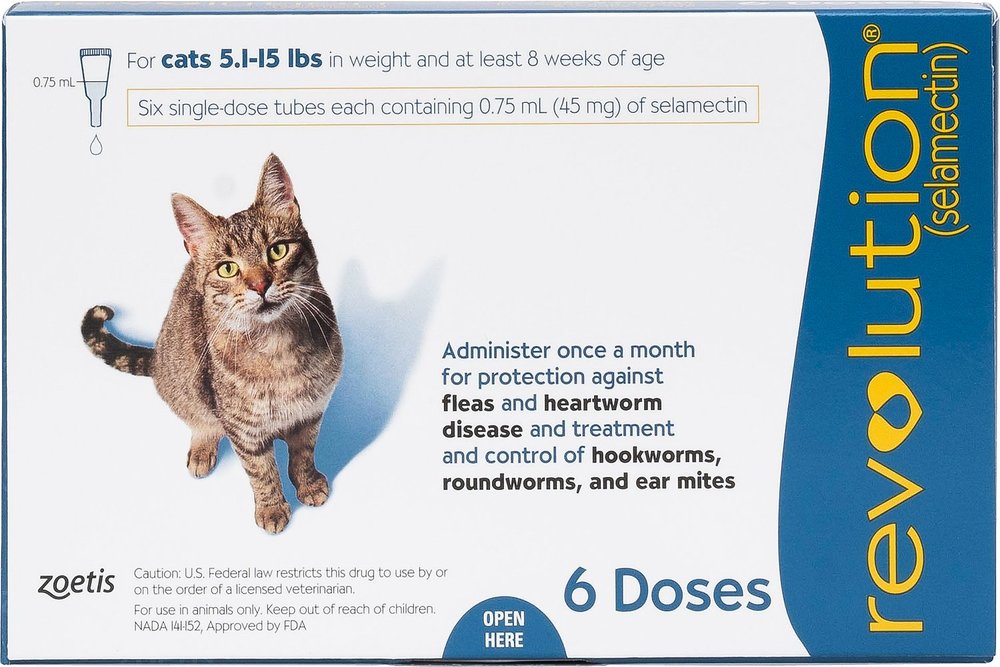
Revolution, as mentioned above, is a great solution for the fleas, worms or mites found in your cat. You must apply this tropical solution to protect your feline from the possible harms or diseases that can cause due to fleas, worms and mites. There are some health risks such as flea allergy, itching, loss of hair and more.
In facts, these fleas can carry as well as transmit several potential diseases to humans too. As the fleas are microscopic in nature, you may not notice them. But it can cause serious health issues like plague and typhus.
Even the worms or mites that reside on the skin or fur of the cats can be worse than fleas. These worms are like parasites that feed on the nutrients that cat. They keep on sucking the blood causing many health problems in your cat. These include anemia, intestinal issues and many more.
Some of the worms can be quite fatal for your cat. Hence, it is important to treat them as soon as you notice any kind of signs or symptoms. Revolution is the best way to treat your cats against the worms, fleas and mites.
Revolution is quite effective in cats for treating the fleas, heartworms, ear mites and more. It can kill the fleas present on the skin of the cat and keep the other fleas off your cat for a longer time. Also, it works great in preventing the heartworm from infesting your cat. This effective tropical solution can also cleanse the infested ears of your cat to kill the ear mites present.
How often should you apply Revolution?
Revolution is proven to be complete safe for your cats and kittens. But you should know how often you must apply or reapply this solution. Too of anything is not good. Just like any other ointment or solution, Revolution also comes with a particular application process.
You can consult with the vets to know what will be right for your cats. Otherwise you can follow the general rule of thumb. To know the accurate guide and principle to apply the Revolution, follow these two rules:
- If the flea problem in your feline is too much, then you need apply the Revolution fortnightly i.e. once in 14 days. If the flea problem is beyond control, then applying the Revolution every 2 weeks is a good solution. This can help you to solve the flea and worm issues from your cat.
- If the flea problem is not that big, then you should use the Revolution only once in a month i.e. 30 days. You can reapply it after 30 days again to protect your cat. But in case you notice that the fleas are coming back even before the month is over, it will be a good idea to reapply tropical solution again on your cat.
You have to identify whether the infestation is too much or just started. In case it is too much with severe symptoms, then follow the first rule. Otherwise, the second rule is enough to treat the flea problem in your cat.
How to apply Revolution on your cat?
You can apply Revolution to your cat and kitten after they become 6-week old or more. There is a process of how you can apply this tropical solution on your cat. To know the exact process, follow these steps:
Step 1: Revolution comes in a form of sealed tube. You have to depress the cap for puncturing the seal and remove the cap slowly to apply.
Step 2: Now, start by parting the hair on the back of the neck until the skin of the cat is visible. Place the tip of the tub right on your cat’s skin and properly squeeze it unless and until the tube is completely empty.
Step 3: It is important to empty the whole solution content right on the skin of that spot. Make sure to apply the product directly over the skin and don’t massage the solution on the skin.
Step 4: Don’t make any contact with the Revolution and make sure your fingers don’t touch it at all.
Important things to know while applying Revolution
The Revolution is a great tropical solution that is 100% effective against the fleas, worms and mites present on your cats. But you need to know some of the important tips that will help you to apply the product in the right way. Here are some of the things that you must keep in mind while applying:
- Don’t apply the Revolution when the hair coat of your cat is wet. If it is, then let it dry properly and then apply the solution.
- Don’t wash your cat or kitten right after applying the solution on your cat’s skin.
- Wait for at least 2 to 3 hours before you can wash your cat after the application. Once it is 2 to 3 hours, Revolution become water resistant and you can wash your cat any time.
Conclusion
Your feline pet is quite dear to you and we know it. Hence, if you want to protect your cat from the infestation of mites, fleas or worms, then you must use Revolution. As it is clearly mentioned, Revolution can be applied in different intervals based on how bad the infestation is.
Follow those rules and you can keep your cat free from these harmful parasites and fleas keeping it healthier and happier. So, look for the signs and symptoms or consult with your vet to know if your cat has fleas or not.
How Long Does It Take For Miralax to Work in Cats
As with humans, cats also encounter difficulty with digestion and constipation. This is a common problem in cats and nothing to worry about as it lasts for a brief time and is mild. However, if these issues persist over three days, certain medications like Miralax are quite helpful. Miralax has relatively fewer adversities and safe to use. If the pet owners are clear about Miralax and how long it takes to work then, it is easier to use it with caution.
How to know your cat is constipated?
Some of the common signs to note are:
- Straining during littering
- Meowing in pain
- Not pooping for a day
- Hard poop
- Dry passing
- Not eating well
- Looking lethargic
- Passing little liquid during pooping
- Vomiting
What is Miralax?

MiraLax is a laxative that can be used for cats to deal with occasional and mild constipation. It softens the stool and alleviates the blockages.
How Long Does It Take For Miralax to Work in Cats?
Miralax leads to the movement of bowels within one day to three days. This is primarily a stool softener and a laxative. It works in a cat by absorbing more water and thereby reducing the surface tension of the bowels. This way the stools softens and eases the bowel movement. This takes about 24 hours to 72 hours. There is no worry of abrupt or instant urgency with its use.
Is Miralax safe to use in cats?
Miralax has been suggested by vets for use in cats. Miralax is safe to use as it works with your body water to soften, ease and hydrate thereby unblocking your pet cat’s intestinal system naturally. It has minimal or no harsh adverse effects.
It is safe as it is FDA or Food and Drug Administration approved. You can purchase it over the counter without any prescription.
When to administer Miralax?
If your cat is dealing with mild constipation but persistent, Miralax is quite helpful. By administering proper dosage, it should relieve constipation in cats in a day to 3 days. Beyond a week, it is best to stop and consult a vet if constipation is persistent.
What is the recommended dosage of Miralax to be used?
Miralax is a powder laxative that is simple to use. Mix Miralax of 1 to 4 teaspoons in your cat food in a frame of 12 hours to 24 hours. Add ¼ teaspoon one time per day in wet cat food. Administer it for 1-3 days initially.
How does Miralax work?
Miralax works by drawing fluids and water into the cat’s colon. This gradually minimizes stress in the bowels. The build-up moisture softens the stools and this puts an end to the cat’s constipation issue permanently.
How long can Miralax be used?
Miralax should not be used for over 7 days continuously. For longer chronic constipation in cats, stop the use after this time and consult your vet.
How long does it take to effect?
Miralax takes some time to display its effects. These outcomes will be visible in a day or two. It is best to check the litter box and alter the daily Miralax dose accordingly. If there is no effect in a day up to a week, then it is best to consult your vet. This can indicate a severe health issue.
How to use Miralax for cats?

You can use Miralax for cats in the following two ways:
- Miralax should be given in amounts of 1/8 tsp in cat food. This is an easier way for your pet cat to consume.
- You can dissolve this powder in water as well. Let your cat consume this water.
- If your cat hesitates, administer it with a syringe. Squirt it gradually without triggering a cat gag reflex.
What is the best time to administer Miralax to your cat?
Administer Miralax before meals preferably during the afternoon. This is because this will let Miralax act and impact the cat’s body for smooth absorption into the body. You can also administer it before the last meal in a day.
How can you increment Miralax dosage after 2 days?
Miralax shows its effects of laxation in a day or two. However, when you are unable to see these effects at this time, then the dosage can be increased to ¼ tsp. Since Miralax shows its effects from 1 to 3 days, it is best to modify the dosage to suit the situation when there is no effect seen.
What points should be remembered when administering Miralax to your cat?
Remember the following as a pet cat owner while using Miralax:
- Miralax is a short-term medication or treatment for the issue of constipation in cats.
- It should not be administered for a long period. It should not be used over a week.
- Cats suffering from Chronic Renal Insufficiency-CRS must not take Miralax and for that matter, any laxative.
- Overdose of Miralax will result in diarrhea with excess hydration. It can worsen the current problem in your pets.
- Do not use it once your cat begins to defecate regularly or normally.
Tips to avoid constipation in cats
Once Miralax works and your cat is regularly defecating, follow these tips for preventing another episode of constipation in cats:
A periodic check of the Litter box- The quick way to detect the constipation issue is to keep a close check on your cat’s litter box. If you find your cat visiting or using its litter box rarely or you notice your cat behaving strangely like straining or crying then it’s a sign of constipation.
Provide water- Ensure your cat is sufficiently hydrated with sufficient water. This will ensure the digestion to be proper and bowel movement to be free. Use a bowl or cat fountain to provide water to your cat.
Balanced diet- Diet, and water should be balanced. Food with sufficient water content and balancing them with dried foods will be minimizing constipation frequency.
Conclusion
Miralax is a good laxative that can be used when you are dealing with a constipation issue with your cat. It takes effect from anywhere from one day to 3 days. When your cat is experiencing mild constipation, administer this powder with its cat food or with water. You will see your cat passing feces in 24 hours. It is recommended to adjust the dose after a day without overdosing it when you see no impact of the laxative. Do not administer Miralax over a week. Get rid of your cat’s constipation with this effective laxative and stool softener, Miralax.
Cat Liver Failure How Long To Live
It can be challenging to diagnose liver problems in cats. A live problem in cats can not only impact their life drastically but also lead to complete failure of their liver. Most of the cat owners think about the life expectancy of their feline friend once its liver fails to work properly. In this write-up, we are briefly discussing the problem of failure of liver in cats and their survival after it.
Liver problems in cats
The liver performs several processes in the body of a healthy cat. Its liver can help in many important chemical processes like producing bile, and clotting factors, detoxifying wastes within its body along with controlling the metabolism of certain foods. For this reason, a problem in a cat’s liver can cause various problems for cats as it performs several important tasks in their body.
Liver failure in cats can happen when the functioning of their liver gets affected due to some internal problem. Their liver can stop working with the same capability when it gets damaged due to any reason. Once the working of the liver is affected then the failure of the liver is a matter of time.
Symptoms and signs of failure of liver in cats

The survival of cats from liver failure can be possible if you recognize their problem well on time through certain symptoms like weight loss, decreased appetite, diarrhea, lethargy, jaundice, excessive urination and thirst, and swelling of the abdomen.
You should immediately contact your vet if any of these symptoms are observed in your cat. These symptoms can indicate some serious health problems to the cat though it may not indicate the failure of its liver.
Diagnosis of cat’s liver failure
To diagnose a problem in the liver of your cat your vet may ask you to perform various tests to get the right impact of the symptoms. The liver failure of your cat can be diagnosed through ultrasound, blood test, radiography, analysis of urine, and biopsy of the liver through exploratory surgery or during an ultrasound.
In the early stage, it can be difficult to diagnose liver failure in cats. So, to give the best treatment to your cat, you must get it diagnosed by your vet as soon as possible.
Rate of recovery of cats from liver disease
The liver of a cat can damage easily as it has to perform various functions in its body but it can also be regenerated easily as the liver can repair itself. So the rate of recovery of the cat from liver problems depends upon the longevity and severity of the sickness.
For instance, a cat may need treatment in a hospital if an acute failure of the liver caused by certain toxins is experienced by it. On the contrary, a cat can recover completely without any treatment even if it has a chronic liver problem.
The chances of recovery can increase if the liver problem in a cat is diagnosed at an early stage. You can give it vitamins and supplements to support its liver, diet prescribed for liver problems as well as treatments prescribed by the vet to improve the rate of its recovery.
In acute cases, you may need to hospitalize it and may need to use a feeding tube to feed it and monitor its condition closely.
So, by observing the behavior of the cat and your quick action to give it medical aid can increase the rate of recovery of your cat from liver failure.
The end-stage of liver failure in cats

The failure of the liver can be in the end-stage if the problem has been diagnosed when it is too severe. This stage happens when the problem in the liver has increased to the point when body processes are drastically impacted. The chances of recovery of the cat from liver failure become negligible once this stage is reached.
At this stage, your cat may experience fluid in the abdomen, severe jaundice, and clotting disorders, etc. To take your cat out of this situation, you will have to give it aggressive hospitalization or it may be difficult to say about its survival and quality of life.
Life Expectancy of a cat with failure of the liver
The survival of a cat from liver failure depends upon the quickness of detection as well as the severity of the problem. It is a bit tricky to diagnose and treat cats with a liver problem. Your cat may live for a limited time if it has been diagnosed by the vet with end-stage failure of the liver
The cat owners have to decide about the quality of life for their cats if the failure of their liver has resulted in fluid in the abdomen, clotting disorders, and other side effects of serious nature. However, you can get your cat back within 6-8 weeks if it is free from most of the symptoms even after being diagnosed with liver failure.
So, how long your cat with liver failure will live depends upon the reasons for damaging the liver and the treatment provided by the vet. Only your vet can tell you about the life of your cat with liver failure as it can be caused due to various reasons. He can tell you in this regard only after doing certain tests.
Euthanizing a cat with liver failure
It is not easy to decide the quality of life for a cat with liver failure. You can think of euthanizing the cat with failure of the liver if it is losing weight drastically, not eating food, chronic diarrhea, vomiting, extreme weakness, swelling in the abdomen, a major shift in behavior, severe jaundice, and not interested in the things of its choice.
Though it is not easy to decide about euthanizing a cat with liver failure but you can know about the sufferings of your cat based on the symptoms discussed above. Your vet can support you if you think about euthanizing your cat with a failed liver.
Though liver failure is a serious health problem in cats still you can ensure their quality of life by recognizing their problem through symptoms, getting them diagnosed and treated by a vet, and giving them additional love and attention.
Conjunctivitis In Cats How Long Does It Last?
Cats are prone to conjunctivitis for several reasons. It’s a very common eye disease in felines. And it can occur in the eye or both eyes in various ways. The common name for conjunctivitis in cats is also the Pink Eye.
Pink eye is the inflammation of the tissues that circles the eye. This pink tissue is also known as conjunctiva so that’s where the term comes from. It’s as likely to get conjunctivitis in one eye as it is in both the eyes.
In cats, conjunctivitis can be infectious and non-infectious. It can show symptoms right away or it only shows up when the situation gets worse.
The diagnosis and treatment of conjunctivitis are the same for most cats. But this also depends on the symptoms and the severity of the symptoms.
Having said that, let’s get a deeper understanding of conjunctivitis. And how long does it last in a cat?
Does Your Cat Have Conjunctivitis?

There are plenty of signs to look for when a cat has conjunctivitis. Excessive blinking, redness, and swelling around the eye, watering, and discharge.
Your cat can make this worse by scratching and pawing the eye. It can cause pus discharge which is either white or yellow in color. It can also cause the skin to tear or bruise due to excessive pawing at the eye.
If for a minor conjunctivitis infection, it’s necessary to take your cat to the vet right away. It’s only a matter of time your cat’s eye will become red and swollen. If your cat is the fidgety kind, then even faster is the worsening of the condition.
This brings me to another important question. How do you diagnose conjunctivitis?
Surely, you won’t be able to know for sure by yourself. Take an appointment with a vet to get this confirmed. They will also give you the correct treatment plan for conjunctivitis.
Conjunctivitis, even if it’s non-infectious, is painful for a cat. The doctor might give your cat some anesthetic eye drops to ease the pain and discomfort. This should numb the area quickly so that the doctor can perform a thorough check-up of the eye.
If there is any dust or irritants stuck on the eye. If the conjunctiva has been scratched or bruised. Or if there is an underlying wound that is not visible directly.
All this is possible only when your cat is unable to feel the stinging pain in the eye. Hence, you must go to a professional vet’s clinic to diagnose the problem.
What Causes Conjunctivitis?

This determines whether the conjunctivitis is infectious or otherwise.
Virus
If the conjunctivitis is caused by viruses, it is the infectious type. It can also cause respiratory problems. And if you have other cats around the house, it can spread easily.
Bacteria
This is also an infectious cause of conjunctivitis. It can infect the cat’s eyes and other sensitive areas such as the ears. It spreads just as quickly as conjunctivitis caused by viruses.
Allergens & Irritants
This is the only type of conjunctivitis that isn’t infectious. Dust, poor air quality, mold, and exposure to chemicals can cause this. Cat shampoos and soaps that have strong chemicals and scents in them. Air fresheners or detergents can cause this type of eye infection.
How Long Does Conjunctivitis Last?

This depends upon the severity and treatment of conjunctivitis. But the average time for conjunctivitis to completely heal is 1-3 weeks. It may take longer if the condition is serious.
Eye drops and other antibiotic meds are prescribed for the treatment of conjunctivitis. If there is an underlying cause such as a virus, then vaccination is also a safe treatment option.
E-collars for cats are necessary during the treatment. The eyedrops can bother your cat. And this will compel her to rub and paw at her infected eye even more. So it’s best to keep your cat’s paws away from her eye with the help of an E-collar.
What Not To Do

If you want to prevent conjunctivitis in your cat, do not do this.
Skipping out on vaccinations
Giving your cat the correct vaccinations when it’s due is necessary. It can prevent serious infections including conjunctivitis. It also reduces the chances of flu, flare-ups, and feline herpes.
Letting your cat play in dirty mud
Damp and dirty mud can carry pathogens and viruses. If they come into contact with your cat’s eye, it can lead to an infection. Keep your cat away from mud and dirt if your cat is prone to such sensitivities.
Giving your cat a bath rarely
It’s not okay to give your cat a bath once in a few months or so. Keeping your cat clean means keeping him away from harmful bacteria and viruses. It’s a good idea to give your cat a bath or a sponge-bath once every 2-3 weeks or so.
If your cat goes outdoors, wiping her eyes and ears on a regular basis is also necessary.
Keeping your cats together
Do you have multiple cats at home? If one of your cats has conjunctivitis, keep her in a separate room. You don’t want all of your cats to get infected. Make sure you keep the rooms clean and hygienic. And that you do not keep a single water bowl and food bowl for all your cats.
Final Thoughts
Can humans get conjunctivitis from a cat?
Well, the chances of that happening are very low. The virus or bacteria to get transmitted to a human and cause the same infection is not likely. However, you must still practice safety and wash your hands after treating your cat’s eye.
Cat conjunctivitis is not a very serious condition. But it can be worse if left undiagnosed and untreated. In the worst situations, it can lead to blindness. Even though blindness caused by cat conjunctivitis is rare. You have to be vigilant about it.
Delaying consulting with the vet about your conjunctivitis is a problem. It can delay the recovery time as well. If you had gone sooner, conjunctivitis would have lasted for half the time. So don’t be lazy and keep a lookout for such nasty infections for the sake of your cat.