 Lisa Thompson
Author Archives: Lisa Thompson
 Lisa Thompson
Author Archives: Lisa Thompson
Even the most conscientious dog-groomer is sometimes faced with the problem of matted fur. Some breeds – especially those with long fur – are more prone to mats than others. In this article we will look at how you can deal with the problem easily.

Most dogs shed their fur. Some shed continually throughout the year while some breeds only shed once or twice a year. When the shed fur doesn’t fall away and instead gets stuck to the fur around it, then a mat will begin to form. Dead skin cells will also get attached to the growing mat, and very soon you’ll have a problem.
Oddly enough, dogs that don’t shed their fur like Poodles and Labradoodles can be more prone to matting than other dogs. The key to the problem is brushing. If you don’t brush your dog often or not correctly, then the risk of mats forming is much greater.
Mats most commonly form in the following areas:
Armpits, where it is more difficult to groom effectively
On your dog’s chest
Around your dog’s ears and the side of its face – especially a problem with very furry dogs
Along the back of your dog’s legs – called the feathering
Between your dog’s back legs and around it’s anus – take care here as the mats may also be contaminated with faeces
If you own a very furry dog or one with particularly long hair, you’ll need to pay special attention to these areas when you are grooming. Prevention, as always, is better than cure. If you can stop the mats from forming then your task will be easier when grooming and your dog will be much more comfortable.
If your dog loves to play in the countryside and often comes back covered in mud and dirt, then the risk of mats developing is high. It is important to wash your dog thoroughly when this happens. Pay particular attention to those areas where there is a high risk of mats forming.
Many dogs enjoy a bath, but some absolutely hate having one. Don’t be tempted to just brush a muddy dog. A bath is essential if you are to prevent mats building up deep within its fur.
There is a risk of infections arising from untreated matted hair. Bacteria can lodge in the mats and ticks and fleas will happily set up home in them. Any mats that have become infected will let off a foul smell and even cause your dog pain. This applies most often to mats on your dog’s feet.
There are some special tools available for dealing with mats. If you find that your dog does have a matting problem, investing in these tools might be a good idea.
The tools are:
A brush for long, thick fur called a tangle teaser
A mat comb that is specially designed for mats
A special knife called a mat splitter that has a curved blade that works under the mat to cut it away
You will also need the following:
A leash so that you can keep your dog secure while you work
A muzzle so your dog can’t bite if it gets anxious or if you pull its fur when working
A pair of scissors – these need to be small and with rounded ends
An oil-based conditioner to use to keep your dog’s fur moist which can help untangle it
Old cloths to clean up any mess and wipe your tools with
And finally:
Some treats to reward your dog at the end of the session
Lots of patience as the job of grooming out mats can take some time

Before starting you session make sure your dog is calm and secure. Also be prepared to spend more than one session clearing the mats if there are a number of them. Your dog might get restless and bored and unable to cope with a long session of grooming.
Don’t rush the job of removing fur mats. You might hurt your dog when using a knife or scissors, especially if it moves suddenly. Once you are ready then follow these suggestions for the best way of tackling the mats:
Firstly, feel around your dog’s body to identify where the mats are positioned. Try to separate the fur surrounding the mat from the mat itself.
Using the conditioner spray wet the mat. Use your fingers to massage the mat and begin to break it up. While doing this lift the mat away from your dog’s skin. Ideally you should be able to raise it so that it is only held by some rooted hairs. Use the mat splitter to cut through the hairs and the mat will come away.
If you are having trouble getting the mat away from the skin, keep massaging it then use the tangle teaser to break the mat up into smaller sections.
Use the mat comb next to comb the surface of the mat. This should pull fur away from the mat making it smaller. Keep working the mat with your fingers.
The aim of these processes is to break the mat up. Using the mat splitter to cut away the loosened sections of the mat will allow you to massage deeper into the heart of the mat. Hopefully more of the mat will come away and the mat will disappear.
If, after all this work, the mat is still proving stubborn, then it’s time to use your scissors. Take care as the mat will be close to your dog’s skin! Cutting a mat away with scissors is very much a last resort.
Pay special attention to any mats that have developed on your dog’s feet and remove them. Some owners like to cut any fur that grows between their dog’s toes to reduce the risk of matting. Mats on your dog’s feet easily get infected and also can cause pain and discomfort.
Once the mat has been removed, brush the fur around the area. It might even be necessary to trim your dog’s fur to make everything look neat and tidy.
Painted turtles are common across the whole of North America. While they cannot be domesticated they can be kept as pets. This article will tell you all about painted turtles, how to care for them and what to feed them with and how often.

Painted turtles are an ancient reptile. They have been on Earth for some 15 million years. These turtles can be found across all of North America, usually in still or very slow moving water.
There are four sub-species of painted turtle each being subtly different. The western painted turtle is found along the western coast of North America and its hinterland. The southern painted turtle is found across Mexico and the southern states of the US. The eastern painted turtle inhabits the eastern seaboard while the midland painted turtle lives in the centre of the continent.
Painted turtles can be kept as pets and are easy to breed. Their breeding season is during the spring and summer months. They breed so well that baby painted turtles are available almost all year round and are inexpensive to buy.
Painted turtles are attractive and appealing. They are called painted because they have red and yellow stripes on their skin under their black or blackish-blue shells and their underbelly is also yellow and red.
These little turtles don’t grow much beyond 12 inches long. The females tend to be a bit bigger than the males. One sub-species, the southern painted turtle is smaller than the others, reaching only about 5 inches in length.
Mostly these turtles don’t outgrow the tank they live in. In a small tank they will stop growing before they become too big for comfort.
Painted turtles have long life-spans. Often they will live for 30 or 40 years with some reaching 50!
Having a long-life means you will have to devote time to caring for them for longer than you might a traditional pet such as a dog or cat. It is important, therefore, to think carefully before purchasing one.
Handling your pet turtle also needs great care. Wash your hands before lifting your pet from its tank and again after you put it back. Turtles do not need regular handling, and actually prefer to be left untouched.
Turtles are docile and slow-moving. However, if you pick one up and it becomes stressed it might scratch you while struggling. It could also bite you!

Painted turtles may not be big animals, but they do need space. They also need enough water to swim in as well as both light and heat. These provisions apply whether you keep them outdoors or indoors.
A single painted turtle will need at least 20 gallons of water to be happy. The water should be about twice as deep as the length of your turtle. Add 10 additional gallons of water for each extra turtle in the tank. As well as room to swim your turtle will need an area that is above the level of the water where it can bask in the sun (or artificial light).
Outdoors, the sun will provide sufficient light but indoors you will need artificial lighting. Incandescent lighting should be set above the basking area, but be aware of the risk of overheating. Fluorescent light will provide enough light but also supply a source of ultraviolet light as it will benefit your pet’s health.
All reptiles need heat to warm their bodies. In nature this will come from the sun. Indoors you will have to provide it yourself. Whichever method of heating you use, take care to monitor it at all times.
Include some plants in your turtle’s accommodation. These will give your pet somewhere to hide. Make sure the plants are checked regularly and changed when necessary.
Painted turtles are omnivorous animals. That means they will eat a variety of plants and meat. To keep your painted turtle in good health it is important to feed it a wide variety of different foods.
In the wild painted turtles will eat dead fish (carrion) and will hunt for injured fish and water-borne insects. Vegetable matter such as duckweed, algae and the seeds of the water-lily is also important. Painted turtles will investigate anything that might be good as food.
In captivity meat can include worms, tiny fish, and insects. Your pet will also enjoy some cooked chicken cut into tiny pieces, chopped-up beef heart and possibly some dog food. If you do feed bits of dog food make sure it is low fat.
Don’t feed your painted turtles iceberg lettuce, but romaine or red-leaved lettuce is okay. Chop up a variety of vegetables for it, and greens like cabbage is also fine. Make sure your turtle gets a broadly based variety of food.
Now to answer the question posed at the start of this article. How often should a painted turtle be fed? Generally painted turtles are good eaters and will tend to put on weight if given unlimited food.
It is recommended that a painted turtle should only be fed once in a two to three day period. Your painted turtle might show a preference for certain foods, but maintain a variety so your pet does not become bored. A variety of food will ensure that your turtle gets a nutritionally balanced diet.
Given the right conditions painted turtles will breed quite happily in captivity. In the wild a female painted turtle chooses her mate based on the quality of his courtship. Once mated the female stores sperm away and will use it to impregnate different clutches of eggs at different times.
Once her eggs are ready the female selects a suitable sandy place and lays her eggs in a hole she has dug. In each clutch there will be between 4 and 11 eggs. Hatching takes at least 72 days, sometimes longer.
Baby painted turtles are good to go from hatching. They do not need their mother and can function in every respect. All they have to do is grow bigger!
Fleas and worms can be quite harmful and dangerous for your feline friend. You need to make sure that you are taking proper care and preventive measures against these fleas to keep your cat safe and protected. One of the best protections is Revolution that can protect the cats not only from fleas but also from hookworms, heartworms, ear mites and more.
It is an easy-to-apply and non-greasy tropical solution for your cats. But how often should you apply Revolution to your cat? To know more about the applications or dos and don’ts, read on.
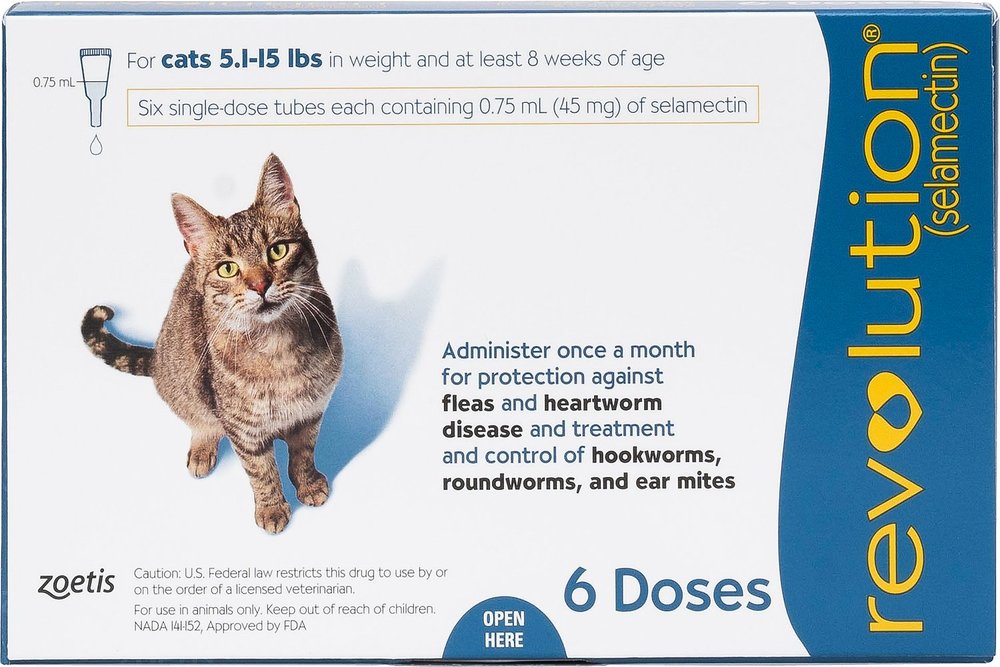
Revolution, as mentioned above, is a great solution for the fleas, worms or mites found in your cat. You must apply this tropical solution to protect your feline from the possible harms or diseases that can cause due to fleas, worms and mites. There are some health risks such as flea allergy, itching, loss of hair and more.
In facts, these fleas can carry as well as transmit several potential diseases to humans too. As the fleas are microscopic in nature, you may not notice them. But it can cause serious health issues like plague and typhus.
Even the worms or mites that reside on the skin or fur of the cats can be worse than fleas. These worms are like parasites that feed on the nutrients that cat. They keep on sucking the blood causing many health problems in your cat. These include anemia, intestinal issues and many more.
Some of the worms can be quite fatal for your cat. Hence, it is important to treat them as soon as you notice any kind of signs or symptoms. Revolution is the best way to treat your cats against the worms, fleas and mites.
Revolution is quite effective in cats for treating the fleas, heartworms, ear mites and more. It can kill the fleas present on the skin of the cat and keep the other fleas off your cat for a longer time. Also, it works great in preventing the heartworm from infesting your cat. This effective tropical solution can also cleanse the infested ears of your cat to kill the ear mites present.
Revolution is proven to be complete safe for your cats and kittens. But you should know how often you must apply or reapply this solution. Too of anything is not good. Just like any other ointment or solution, Revolution also comes with a particular application process.
You can consult with the vets to know what will be right for your cats. Otherwise you can follow the general rule of thumb. To know the accurate guide and principle to apply the Revolution, follow these two rules:
You have to identify whether the infestation is too much or just started. In case it is too much with severe symptoms, then follow the first rule. Otherwise, the second rule is enough to treat the flea problem in your cat.

You can apply Revolution to your cat and kitten after they become 6-week old or more. There is a process of how you can apply this tropical solution on your cat. To know the exact process, follow these steps:
Step 1: Revolution comes in a form of sealed tube. You have to depress the cap for puncturing the seal and remove the cap slowly to apply.
Step 2: Now, start by parting the hair on the back of the neck until the skin of the cat is visible. Place the tip of the tub right on your cat’s skin and properly squeeze it unless and until the tube is completely empty.
Step 3: It is important to empty the whole solution content right on the skin of that spot. Make sure to apply the product directly over the skin and don’t massage the solution on the skin.
Step 4: Don’t make any contact with the Revolution and make sure your fingers don’t touch it at all.
The Revolution is a great tropical solution that is 100% effective against the fleas, worms and mites present on your cats. But you need to know some of the important tips that will help you to apply the product in the right way. Here are some of the things that you must keep in mind while applying:
Your feline pet is quite dear to you and we know it. Hence, if you want to protect your cat from the infestation of mites, fleas or worms, then you must use Revolution. As it is clearly mentioned, Revolution can be applied in different intervals based on how bad the infestation is.
Follow those rules and you can keep your cat free from these harmful parasites and fleas keeping it healthier and happier. So, look for the signs and symptoms or consult with your vet to know if your cat has fleas or not.
As with humans, cats also encounter difficulty with digestion and constipation. This is a common problem in cats and nothing to worry about as it lasts for a brief time and is mild. However, if these issues persist over three days, certain medications like Miralax are quite helpful. Miralax has relatively fewer adversities and safe to use. If the pet owners are clear about Miralax and how long it takes to work then, it is easier to use it with caution.

MiraLax is a laxative that can be used for cats to deal with occasional and mild constipation. It softens the stool and alleviates the blockages.
Miralax leads to the movement of bowels within one day to three days. This is primarily a stool softener and a laxative. It works in a cat by absorbing more water and thereby reducing the surface tension of the bowels. This way the stools softens and eases the bowel movement. This takes about 24 hours to 72 hours. There is no worry of abrupt or instant urgency with its use.
Miralax has been suggested by vets for use in cats. Miralax is safe to use as it works with your body water to soften, ease and hydrate thereby unblocking your pet cat’s intestinal system naturally. It has minimal or no harsh adverse effects.
It is safe as it is FDA or Food and Drug Administration approved. You can purchase it over the counter without any prescription.
If your cat is dealing with mild constipation but persistent, Miralax is quite helpful. By administering proper dosage, it should relieve constipation in cats in a day to 3 days. Beyond a week, it is best to stop and consult a vet if constipation is persistent.
Miralax is a powder laxative that is simple to use. Mix Miralax of 1 to 4 teaspoons in your cat food in a frame of 12 hours to 24 hours. Add ¼ teaspoon one time per day in wet cat food. Administer it for 1-3 days initially.
Miralax works by drawing fluids and water into the cat’s colon. This gradually minimizes stress in the bowels. The build-up moisture softens the stools and this puts an end to the cat’s constipation issue permanently.
Miralax should not be used for over 7 days continuously. For longer chronic constipation in cats, stop the use after this time and consult your vet.
Miralax takes some time to display its effects. These outcomes will be visible in a day or two. It is best to check the litter box and alter the daily Miralax dose accordingly. If there is no effect in a day up to a week, then it is best to consult your vet. This can indicate a severe health issue.

Administer Miralax before meals preferably during the afternoon. This is because this will let Miralax act and impact the cat’s body for smooth absorption into the body. You can also administer it before the last meal in a day.
Miralax shows its effects of laxation in a day or two. However, when you are unable to see these effects at this time, then the dosage can be increased to ¼ tsp. Since Miralax shows its effects from 1 to 3 days, it is best to modify the dosage to suit the situation when there is no effect seen.
A periodic check of the Litter box- The quick way to detect the constipation issue is to keep a close check on your cat’s litter box. If you find your cat visiting or using its litter box rarely or you notice your cat behaving strangely like straining or crying then it’s a sign of constipation.
Provide water- Ensure your cat is sufficiently hydrated with sufficient water. This will ensure the digestion to be proper and bowel movement to be free. Use a bowl or cat fountain to provide water to your cat.
Balanced diet- Diet, and water should be balanced. Food with sufficient water content and balancing them with dried foods will be minimizing constipation frequency.
Miralax is a good laxative that can be used when you are dealing with a constipation issue with your cat. It takes effect from anywhere from one day to 3 days. When your cat is experiencing mild constipation, administer this powder with its cat food or with water. You will see your cat passing feces in 24 hours. It is recommended to adjust the dose after a day without overdosing it when you see no impact of the laxative. Do not administer Miralax over a week. Get rid of your cat’s constipation with this effective laxative and stool softener, Miralax.
So, you are a bit worried about your pet. You feel that your dog is having diabetes. I understand your mental condition. You want to take the best care of your little companion. You want to provide the right treatment to minimize the impact of the disease.
Many pet owners even do not know that dogs can get diabetes. Yes, it is possible. In this article, we will try to answer all your queries related to diabetes in dogs. You will know how long your pet can leave without treatment and when you should talk to your vet.
Once you know your dog has diabetes, the first thing that will bother you is the life expectancy. It is worth mentioning that the treatment is a bit expensive. If you are planning to visit your pet, then inquire about the expenses.
Many pet owners change their minds at the last moment since they find the treatment unaffordable. The treatment cost will include the veterinarian visit cost, medications with insulin cost, and the diabetic food cost. All these are going to cost you more.
Now the question comes how long your pet can live without treatment. The answer is unpredictable. We cannot give an exact timeframe. It could be only six months. But yes, some dogs can live many years even if left untreated.
Your dog might live more than your expectation. But the suffering will not be less. Your non-human friend is going to suffer a lot throughout if you leave it untreated. When it comes to suffering, it will affect the entire body.
The weight loss will be visible. The vision will be compromised. It can lead to blindness as well. Your pet will get frequent infections and the recovery time will be slower than before. You will have to take extra care to protect your dog from infections.
In addition to the above, your pet can suffer from weakness, muscle loss, renal failure, frequent urination, arthritis, and heart problems. These symptoms are common for most dogs with diabetes. However, you can improve the condition.
You can consider treatment to give a normal life to your pet. The life expectancy will be much more for treated dogs. They can live like a healthy dog with the right treatment. You can give the required medication and insulin to enable your pet to live long without any suffering.

We all know that the treatment is not going to cure your dog completely. You cannot expect a complete recovery. But it will minimize the impact significantly. With the right treatment, you can prevent most of the complications related to diabetes.
In brief, we can say that the condition is not curable but treatable. If you start the treatment at an early stage, your pet will not experience any severe complications such as vision loss and muscle loss. The dog can live a normal life like a healthy dog.
The cost will be ongoing. You cannot stop the treatment in the middle. If you do so, the dog will experience all those issues related to diabetes. You will have to give insulin daily to keep the blood glucose level under the control.
The same is about the food. A diabetic dog is going to follow a specific diet. The diet and insulin with other medications will dramatically improve the quality of your pet’s life. Also, you will not have to be worried about the lifespan of the dog.
When it comes to the treatment, you should consider it within the first six months. Once diabetes is diagnosed, you should plan for the treatment as soon as possible. The riskiest time is the first six months.
During the first six months, your vet will observe your dog decide the right insulin level to manage the blood sugar levels of your pet properly. Any delay might cause more harm to the dog.

Genetics will have the determining role. Some dog breeds are prone to diabetes. In addition to genetics, pancreatitis, infectious diseases, and viruses can cause diabetes. Another risk factor for diabetes in your pet is Cushing’s disease. However, it is less common.
These conditions will damage the insulin-producing cells of dogs’ pancreas. When the insulin-producing cells will be damaged, the sugar will not be converted into energy at the same rate. As a result, your pet will experience many health complications.
You will have to look for a few symptoms to know your dog is having diabetes or not. The most common symptoms are increased thirst, increased hunger, and frequent urination. If you notice all these symptoms, you should talk to your vet.
In addition to the above, the dog might lose weight. If your pet is losing weight without any obvious cause, you should not ignore it. You should look for other symptoms to find out the cause.
Your pet loses weight because the lack of insulin will not allow the glucose to be transported to your pet’s muscle cell.
Therefore, their body will depend on the fat stores and muscle mass to get the energy to perform different functions.
Diabetes can cause increased fatigue and lethargy in your pet. These are a few symptoms that can enable you to understand your pet’s condition. If you have any doubt, consult with your vet to rule out any possibility.
As mentioned above, the treatment will include dietary changes, insulin, and some other medications. Also, the dog will have to do moderate exercises to manage diabetes. You will have to give insulin twice daily to control blood sugar levels.
You will have to observe the condition of your pet to prevent hypoglycemia. Your vet will help you in this regard. You will know when and how to adjust the insulin to maintain the blood sugar level.
Your dog can live from six months to many years with untreated diabetes. However, you can improve the quality of your pet’s life significantly with the right treatment. Your pet can live long like a healthy dog.
When petting a dog pet owners need to face many concerns and among the major causes of concern is the enlarged spleen of the dog. So what can be done if your pet gets diagnosed with an enlarged spleen? There are a lot of things that can bear trouble on your dog and cause it to have a larger than normal spleen such as canine hepatitis, abdominal injury, inflammatory bowel disease, infectious disorders, spleen cell tumors, bacterial infection along other disorders of the immune system.
The condition of enlargement of spleen in dogs is known as splenomegaly. The medical condition can possibly occur in almost all dog genders and breeds, but the larger breeds and middle-aged dogs are more prone. Also, the condition isn’t specific to the spleen, but can also be another conditions or disease symptom. The treatment options are also recommended depending on the splenomegaly cause.

There can be many reasons for enlarged spleen such as infections, cirrhosis and other diseases of the liver, blood diseases that are characterized through abnormal blood cells, lymph system issues, or other problematic conditions. Various other reasons for an enlarged spleen can be inflammatory diseases like sarcoidosis, rheumatoid arthritis, and lupus.
The general symptoms observed with the enlarged spleen condition are:
Many pet owners are not aware of the life of their dog with life-threatening conditions like spleen cancer. So, what is the average survival dog time with splenic HSA that got chemotherapy and surgery is approx. 4-6 months (compared with 1-2 months alone with surgery).
The prospective complications that your dog can get through an enlarged spleen are: Catching infection. With a larger than normal spleen the dog gets reduced total amount of healthy red blood cells, white cells, and platelets in the bloodstream, which results in more infections frequently. It is also possible to get anemia with increased bleeding.
Hemangiosarcoma (HSA) of spleen remains to be a devastating cancer form affecting a lot of dogs. This is vascular epithelial cells (lining blood vessels) compromising roughly 7% of all canine cancer. The tumor can occur through site of the body which is vascular but frequent dog locations (40-50%), right atrium/heart (10-25%), and skin (15%). Hemangiosarcoma of spleen is among the common spleen cancer causes in dogs.
This depends a lot on the cause of the problem. An enlarged spleen can turn to normal function and size when the underlying disease gets timely treatment or resolution. Most commonly, in the infectious condition of mononucleosis, the size of spleen returns to normal in the recovery phase of the infection.

Various underlying medical issues can easily get treated through prescription medication. In case when the enlarged spleen gets removal, your dog will require some time and rehabilitation for proper healing, and make sure to restrict its activity.
Currently, there are no known preventable measures that you can get for an enlarged spleen. You should consider the best pet insurance services. That will also help you in the process of taking care of your pet
Based on the findings, the average duration of survival for dogs having hypodermal HSA is around six months. Without getting the right treatment, a lot of dogs diagnosed with internal organs HSA will die within one to two weeks of getting diagnosed. Although, a few would be able to survive for a lot of months while others only for a few days.
Without having treatment, the dogs diagnosed with the hemangiosarcoma of internal organs die within one or two weeks, although a few would be able to survive for various months.
People or animals without the availability of spleen can have a hard time in getting recovered from an injury or an illness. For getting reduced risk of infection, your doctor would recommend getting vaccinated against influenza, pneumonia, meningococci, and Haemophilus influenza type b (Hib).
The recovery period would last for around four to six weeks
While getting examined a protruding abdomen or a protruding spleen might get noticed. Then fine needle aspiration is used for diagnosing spleen disorder. Also, x-rays and ultrasounds are used for viewing spleen with surrounding areas for checking out any present abnormalities. Additionally to imaging, the blood work also provides comprehensive review of underlying medical troubles.
Make sure to avoid icy cool drinks, frozen foods, winter or bitter melon, cucumber, grapefruit or lettuce deplete “fire” of the spleen. The “damp” foods like refined sweets and sugars, dairy products – can also hinder digestion processes.
Splenic Masses overview: nodular hyperplasia and splenic hematoma are among the different non-cancerous lesions present in the spleen and these accounts for around 20-41% of all the splenic lesions. These are benign masses/nodules of the clotted blood.
If your vet has discovered enlarged spleen then more investigation would be required. With ultrasound, you can detect any signs of spreading to abdominal and neighboring organs. With a CT scan, it can be revealed if any other distant organs have become affected which might be suggestive of any metastatic cancer.
Proper blood work would be helpful in revealing if any anemia is present which might suggest any bleeding through spleen. After getting all the findings, the vet might also suggest biopsy and removal of spleen and/or consultation of an oncologist.
Recommended options for treatment depend largely on the underlying enlarged spleen causes. As the enlarged spleen is normally sign of any underlying medical condition, it would be vital for understanding causes before you establish proper animal treatment. For severe cases, spleen removal (splenectomy) is recommendable.
Unfortunately, to date, hemangiosarcoma remains to be among the most mysterious and challenging conditions that have been present in modern-day veterinary practice. Also, it is unfortunate that within previous 20 to 30 years no advances were there for the treatment of such condition. This is most likely because humans normally don’t get information about hemangiosarcoma because of limited research or funding.
Bladder cancer is rare in dogs and usually takes the form of a tumor on the lining of the bladder. These tumors are known as transitional cell carcinomas (TCC). This form of cancer can be aggressive and can spread to other areas of the dog’s body.
This article is devoted to helping you as a dog owner spot the symptoms of bladder cancer. We will also explain the causes and outline the treatments that can be used.
There is no clear, concise answer to what causes bladder cancer. Experts suggest that there are several possible causes. These include:
Hereditary factors. Some breeds of dog are more susceptible to bladder cancer than others. These include Scottish Terriers, Beagles, Airedales, West Highland Terriers, Wire Hair Fox Terriers, and Shetland Sheepdogs. This suggests that there may be a genetic factor involved.
Gender. It is not known why, but female dogs stand a higher risk of developing bladder cancer than male dogs.
Obesity. Some breeds of dogs – terriers particularly – that are overweight are more prone to bladder cancer.
Neutering. There is a much higher risk of bladder cancer developing in neutered male dogs than in those that are not.
Pesticides and Herbicides. Both of these products contain ingredients that raise the risk of bladder cancer in dogs exposed to them. It is known, for example, that herbicides used to treat lawns can lead to a higher risk of cancer.
Cyclophosphamide. This is a drug used in chemotherapy. In cases where a dog has previously had cancer and has been treated with this drug, then the risk of bladder cancer in the future is raised.

One problem with almost all cancers is that they are very hard to detect in the early stages. Often no symptoms will show or the few that do show are similar to the symptoms of other illnesses. Bladder cancer is just the same, and the cancer may be well advanced before any symptoms can be detected.
The symptoms to look out for are:
Traces of blood in the dog’s urine. We don’t usually check our dog’s urine when it has a pee. It is likely you will only notice it by chance. When any of the other symptoms show, be sure to check the urine for blood at that stage.
Straining to pee. You may notice that your dog is making an effort to urinate.
Frequent small amounts of urine. Should your dog pee often and then only in tiny amounts, this may be a sign of a problem. Male dogs particularly mark territory in this way, so watch for other signs of a problem.
Incontinence. When your dog doesn’t finish urinating properly and urine continues to dribble, then something is wrong.
Bladder infections. Repeated bladder infections can be a sign that your dog has cancer. Ask your vet to check for cancer if your dog is getting these infections frequently.
Loss of appetite. When cancer becomes established your dog will begin to show signs that are common to all cancers. Loss of appetite is an important symptom to note.
Lethargy. Your dog will also become much less active and show no interest in playing or walking.
Pain. A large tumor in the bladder will cause pressure in your dog’s abdomen. This in turn will lead to pain and discomfort. A dog in pain is a distressing sight to see.
Constipation. Depending on where in the bladder the tumor has grown, one symptom might be constipation. Watch your dog to see if it is having trouble when trying to defecate.
Coughing. If your dog begins to cough often, then there is a possibility that the cancer has spread to its lungs.
Failure to urinate at all. At a very advanced stage the tumor may be so large that it blocks the bladder and prevents any urine from being expelled. Your dog will be in pain and may simple collapse.
As the signs of bladder cancer are the same as the signs of other bladder problems in the early stages your vet will want to test carefully. Your vet will run a blood count, create a biochemistry profile, and analyse your dog’s urine. Bladder infections can then be ruled out.
The next step is for your vet to carry out a biopsy. This will involve the removal of a small piece of bladder tissue for analysis. A biopsy will give a completely accurate diagnosis.
Following the biopsy the next task is to establish the stage that the cancer has reached. There are four stages:
Stage 0 and Stage 1. These are the earliest stages and it is unusual to get a diagnosis this early. The few symptoms your dog will show – if any – will be slight and probably not raise any suspicions.
Stage 2 and Stage 3. By this stage there will be blood in your dog’s urine, it will find peeing difficult and the cancer will have spread across most of the bladder.
Stage 4. By the time Stage 4 is reached, the cancer will have spread into other areas of your dog’s body.

There are three possible approaches to treatment. The most common treatment is chemotherapy using the drugs piroxicam and mitoxantrone . Alternatively only one drug – most often piroxicam – is used. Both treatments can extend your dog’s life.
Surgery for bladder cancer is difficult and fraught with danger. The position of the tumor can mean accessing it requires complex surgery and then all the cancer may not be removed. If early detection has been possible, then removing the tumor completely gives your dog the best chance of survival.
Radiation is the third possible treatment but again this carries dangers with it. Your dog’s bladder might be damaged by the radiation, and other organs nearby in the body may also be affected.
Being diagnosed with bladder cancer will mean your dog’s life has been shortened. While chemotherapy will add a few months or maybe a year it can only delay the inevitable. It is important therefore to give your pet the best care you can at the end of its life. Here are some tips on care:
Make sure your dog has a plentiful supply of clean water available at all times.
Give your dog moist food rather than dry.
Don’t over-exercise your dog. Easy walks and quiet play is best. Keep an eye on your dog’s toilet habits for any changes.
Avoid accidents in the home by using special dog diapers.
Your dog will have good and bad days. Keep track of food and drink consumed each day to help your vet monitor your dog’s progress.
Most of all give your dog all the love and attention he or she deserves after the lifetime of loyalty they have shown you. Don’t let your dog pick up on your distress – dogs are surprisingly aware of their owner’s moods.
It can be challenging to diagnose liver problems in cats. A live problem in cats can not only impact their life drastically but also lead to complete failure of their liver. Most of the cat owners think about the life expectancy of their feline friend once its liver fails to work properly. In this write-up, we are briefly discussing the problem of failure of liver in cats and their survival after it.
The liver performs several processes in the body of a healthy cat. Its liver can help in many important chemical processes like producing bile, and clotting factors, detoxifying wastes within its body along with controlling the metabolism of certain foods. For this reason, a problem in a cat’s liver can cause various problems for cats as it performs several important tasks in their body.
Liver failure in cats can happen when the functioning of their liver gets affected due to some internal problem. Their liver can stop working with the same capability when it gets damaged due to any reason. Once the working of the liver is affected then the failure of the liver is a matter of time.

The survival of cats from liver failure can be possible if you recognize their problem well on time through certain symptoms like weight loss, decreased appetite, diarrhea, lethargy, jaundice, excessive urination and thirst, and swelling of the abdomen.
You should immediately contact your vet if any of these symptoms are observed in your cat. These symptoms can indicate some serious health problems to the cat though it may not indicate the failure of its liver.
To diagnose a problem in the liver of your cat your vet may ask you to perform various tests to get the right impact of the symptoms. The liver failure of your cat can be diagnosed through ultrasound, blood test, radiography, analysis of urine, and biopsy of the liver through exploratory surgery or during an ultrasound.
In the early stage, it can be difficult to diagnose liver failure in cats. So, to give the best treatment to your cat, you must get it diagnosed by your vet as soon as possible.
The liver of a cat can damage easily as it has to perform various functions in its body but it can also be regenerated easily as the liver can repair itself. So the rate of recovery of the cat from liver problems depends upon the longevity and severity of the sickness.
For instance, a cat may need treatment in a hospital if an acute failure of the liver caused by certain toxins is experienced by it. On the contrary, a cat can recover completely without any treatment even if it has a chronic liver problem.
The chances of recovery can increase if the liver problem in a cat is diagnosed at an early stage. You can give it vitamins and supplements to support its liver, diet prescribed for liver problems as well as treatments prescribed by the vet to improve the rate of its recovery.
In acute cases, you may need to hospitalize it and may need to use a feeding tube to feed it and monitor its condition closely.
So, by observing the behavior of the cat and your quick action to give it medical aid can increase the rate of recovery of your cat from liver failure.

The failure of the liver can be in the end-stage if the problem has been diagnosed when it is too severe. This stage happens when the problem in the liver has increased to the point when body processes are drastically impacted. The chances of recovery of the cat from liver failure become negligible once this stage is reached.
At this stage, your cat may experience fluid in the abdomen, severe jaundice, and clotting disorders, etc. To take your cat out of this situation, you will have to give it aggressive hospitalization or it may be difficult to say about its survival and quality of life.
The survival of a cat from liver failure depends upon the quickness of detection as well as the severity of the problem. It is a bit tricky to diagnose and treat cats with a liver problem. Your cat may live for a limited time if it has been diagnosed by the vet with end-stage failure of the liver
The cat owners have to decide about the quality of life for their cats if the failure of their liver has resulted in fluid in the abdomen, clotting disorders, and other side effects of serious nature. However, you can get your cat back within 6-8 weeks if it is free from most of the symptoms even after being diagnosed with liver failure.
So, how long your cat with liver failure will live depends upon the reasons for damaging the liver and the treatment provided by the vet. Only your vet can tell you about the life of your cat with liver failure as it can be caused due to various reasons. He can tell you in this regard only after doing certain tests.
It is not easy to decide the quality of life for a cat with liver failure. You can think of euthanizing the cat with failure of the liver if it is losing weight drastically, not eating food, chronic diarrhea, vomiting, extreme weakness, swelling in the abdomen, a major shift in behavior, severe jaundice, and not interested in the things of its choice.
Though it is not easy to decide about euthanizing a cat with liver failure but you can know about the sufferings of your cat based on the symptoms discussed above. Your vet can support you if you think about euthanizing your cat with a failed liver.
Though liver failure is a serious health problem in cats still you can ensure their quality of life by recognizing their problem through symptoms, getting them diagnosed and treated by a vet, and giving them additional love and attention.