
- Home
- Dog Health
How to Keep Your Dog in Shape
It’s very important to keep your dog in shape. Various physical activities such as daily walks and hikes, running together, or simply playing in the park can provide huge benefits to your pet in the long run. Read on for some tips on how to get your dog in good shape.
Benefits of Regular Exercise
Regular exercise really has a lot of benefits to your dog’s health. Active dogs have a faster metabolism, eat less, and have fewer body temperature problems. By exercising regularly, not only will the dog be in great shape, but its energy will be redirected to something useful, instead of potentially destroying furniture or your belongings.
Age and Capabilities of Your Dog
The exercises that your pet needs to perform must be carefully selected according to age, breed, and its general health. In young dogs, such as those aged between six and 18 months, and shepherds, hunting dogs or terriers, the need for daily exercise is likely to be greater. However, if the dog is too old, young, or sick, strenuous exercise should be avoided.
It’s important to monitor the capabilities and limitations of your pet. If you notice that the dog is lagging behind or struggling, stop the training for that day and next time slow down or shorten the exercise. It’s also wise to gradually bring the dog to the intensity of exercise you want over a few weeks. Weather conditions can also be unfavorable – don’t force the dog if it is very hot or cold outside. Don’t forget to take regular breaks.
It’s up to you and your veterinarian to think of what is best for your pet, following its needs, abilities and health. Something you should never forget is to walk your dog every day.
Assess the Condition of the Animal
Visually understanding whether an animal is too heavy is quite simple: if there is no obesity, you will easily feel the ribs, and looking at the pet from above, you will see the waist. If you see that your pet is obese, take him to the vet. Have him assess the condition of your dog and determine if there are any health problems and make professional recommendations. For example, some breeds of dogs have a weak heart, and you need to know that before you make your pet strenuously exercise.
Obesity is not always the fault of the wrong lifestyle of the pet, so you should immediately find out if your dog has a tendency to gain weight. For example, neutered pets often gain more weight. Learn about risk factors for preventing overweight problems. Even if visually everything is fine with your dog, don’t wait for obesity to happen.
Develop a Proper Diet

There should be a strictly limited number of meals per day for your dog. Don’t give snacks and sweets during the day and don’t feed the animal everything that you and your family members couldn’t eat. If it already has weight problems, switch your pet to a diet. If not, it is enough for the diet to be balanced and healthy.
Low-Calorie Treats
If your dog likes to perform tricks, low-calorie rewards will be the perfect thing for it. These can be pieces of banana, apple, pear or melon, peas, pieces of cooked meat, purchased low-calorie desserts or popcorn (without butter, oil and salt).
Get Active

First, find the physical activity that works best for your pet and you. Explore the various options like walking, running, throwing a stick and coming back, swimming, playing with other dogs, or learning reward tricks. If you are a fan of some outdoor activities, include your dog in them. Try to go hiking with your dog, physical activity will be pleasant for both of you.
Set Aside the Time to Play with Your Pet
An adult dog will not begin to move actively on its own, it should be motivated with something. Add excitement. Buy a pair of toys and train your pet regularly. This is a good way to strengthen your bond with it and cheer both yourself and your dog up.
Motivate the Dog to Move Around

If the animal is lazy and toys don’t motivate it, you will have to switch to a different strategy – its love for food. Teach it to deserve food. Offer it dinner or lunch in a playful way. There are a lot of great solutions in pet stores – a ball that will spill food while you play with it, or an interactive device from which the dog will have to get its food.
Pet Gyms
Pet-fitness appeared in big cities a few years ago, but it didn’t gain much popularity at the time. The philosophy of such institutions is simple: if the owner doesn’t have time to walk his dog or play with the cat for a few hours a day, let him take them to a place specially intended for that. Thus, the pet will be able to maintain its natural activity, and expend energy on toys instead of curtains and wallpaper in the apartment, thus maintaining a good mood.
These gyms are especially useful for dogs, which need more activities than two short walks a day outside. In the fitness center, the dog will be able to swim, run on the treadmill or do other exercises under the supervision of experts. All doggy workouts are held individually. Often, animal fitness centers are also used to rehabilitate pets after injuries or illnesses.
As a rule, new clients are accepted into such institutions only with confirmations of the necessary vaccinations. Apart from these gyms, they are developing simulators for pets: special toys for parrots, wheels and ladders for hamsters, multi-layered “houses” for cats with steps. A good trainer is not cheap, and you should only hire one if you are sure that you aren’t ready to deal with your dog on your own.
Authors bio:
Bily Bum is an electrical engineer, tech, and gaming fan with 15 years of experience in the technology world. He uses every spare moment to workout to stay in shape. With his family and friends, he likes to go camping or picnicking where he enjoys the benefits of nature. He is also a contributor on site Techiezer.
Keep Your Pets Calm During New Year’s Eve Fireworks – 4 Tips
One of the most exciting parts about New Year’s Eve celebrations are the fireworks. They signify the excitement of starting a whole new year full of possibilities. Some cities spend millions of dollars on their New Year’s Eve fireworks show and millions of people enjoy the spectacle.
Whether you are watching them on TV, or in person, they are a wonderful sight, albeit very loud. However, while most humans stand the sound and still love fireworks, the same can’t be said for your pets. Most pets go to hide under the bed or in the basement as soon as they hear something that loud.
Not only that, but they can also tend to freak out and get pretty frightened. Thankfully, there are some ways to keep your pets calm during New Year’s Eve fireworks, and this article is going to look at a few of them.
Consider Enlisting the Help of a Vet
If you have a question or concern like this, a logical place to visit is the office of a vet. Having a phobia of fireworks is common among pets, but is indeed treatable. Your vet can offer you great advice on things you can do at home, but could also refer you to an animal behavior specialist of some kind.
There may even be some kinds of medication that can help. Ask your vet what is available, and you are likely to see a range of different options. Today, we can find CBD for dogs at Relaxation.co, that can help them relax and stay calm. The options are endless and you are sure to find something that will be able to help your pet stay calm when things get a little loud.
Do Things to Mask the Sound
Anything you can do to mask the sound of the fireworks will help your pets. Keeping the doors and windows closed, playing music or a TV show or even simply talking and playing with the pet can help distract them.
You could even build a safe space or pet fort for your animal. This could be a cozy and enclosed space which could further help them escape the loud noises. Blankets, toys and anything else you think could be beneficial can also be added.

Work to Desensitize Them to Loud Sound
Simply hiding your pet from fireworks and other loud sounds for the rest of their lives isn’t always the most practical solution. As a result, many people will look to simply desensitize them to loud sounds. Pets aren’t inherently afraid of fireworks, so they can be taught to tolerate them without being too scared or freaked out.
Start by gradually exposing your pets to a busy dog park, an outdoor concert or a busy market. You can even simply make your home a little louder from time to time to let them know that loud noise doesn’t always have to be jarring. Over time, as you slowly train them, you will notice that they are able to remain calm when things get loud as they have experienced it and gotten used to it in the past.
Stay Calm Yourself and Reassure the Pet
Your pet is incredibly intuitive, and if you remain calm and cool during fireworks, there is a better chance that they will do the same. Also, holding your pet and applying pressure to them can enlist a sense of comfort in them as well. So be sure to hold your pet on your lap and cuddle with it if you’re able to during the fireworks.
If you are unable to be with your pet during the fireworks, you can buy items or clothing that can actually apply gentle pressure to your pet. This will help keep them calm, relax them and make them feel more comfortable. The benefits would be similar to those offered by using a weighted blanket as a human.
In conclusion, the information within this article will be able to help your pets calm during New Year’s Eve fireworks and other loud events.
How Dog Walking Injuries Are Increasing Among Older Adults
Dog walking helps you reach your exercise goals, but it may also increase the risk of injury, especially among older adults. During recent years, there has been a significant increase in people getting injured while walking their dogs. Dog ownership has been on the rise, and more and more older adults choose to live an active life, so it’s not uncommon to see a man or a woman going for a run with their pup’s leash wrapped around their wrist.
Sadly, broken wrists are some of the most common dog walking injuries, in addition to broken elbows and fractured hips. According to the University of Pennsylvania, adults, and especially women over the age of 65 are most at risk.
How to prevent dog pulling injuries
Dog leash injuries are incredibly common, and most pet owners don’t even realize it. Emergency rooms report various types of injuries that regularly occur during dog walking – from the severe wrist and finger fractures to dislocated shoulders and ruptured tendons.
Here are several tips on how to prevent dog pulling injuries:
Stop wrapping the leash
While it may seem that wrapping the leash around your fingers or your wrist may be a safer option than holding it in your hand, it’s quite the opposite.
If your dog suddenly takes off, it happens within seconds, and you have no time to unwrap the leash. By the time you even feel and realize something’s going on with the leash, you may have already suffered a fraction, or you may already be on the ground.
And keep in mind that those are not simple breaks, especially for older adults. Dog leash wrist injuries, as well as finger fractures, can be nasty. They often require an operation, and recovery can take a long time.

Never slide your fingers under the collar
Twisting your fingers under the collar as your dog jumps or pulls away may also cause severe injuries. Try grabbing the attachment ring instead of sliding your fingers under the collar, or try to pinch the collar at the edges. It may take some practice to get used to it, but both are much safer options.
You should also never grab the collar trying to separate your dog when he starts barking or growling at another dog, especially if they get close to each other. Dogs are much more aggressive in these situations, and you may end up getting bitten. If any of the dogs clamps around your finger, you may face horrible injuries.
It’s particularly important to pay attention if you’re handling a big, strong dog because they can generate great force, and they have powerful jaws. However, even smaller dogs can catch you off guard with a sudden movement, and it may lead to broken fingers.
Keep the dog on a short leash
When you keep your dog on a long leash, you give him much more space to explore, but you also give him time to start running and gain speed that he would never have if the leash were short. As a result, the dog may end up dragging you, or you may completely let go of the leash. Many people suffer shoulder pain after a dog pulling a leash, especially if the leash was too long. Shoulder injuries from dog walking are not uncommon, and they are best prevented by training your dog to walk on a short leash.
A short leash will give you more control over your dog, and you will have time to react and brace yourself the second a distraction comes up. A squirrel, another dog, a cat – you may encounter numerous distractions, and you should always be prepared to react on time. A short leash will help you with that.

Pay Attention
Perhaps the most important tip of them all is always to pay attention to your dog when you’re out on a walk. If you’re present in the moment and not distracted by anything, you will always have time to react to various situations. You’ll never be caught completely off guard and that alone can prevent you from getting hurt.
Consider the following:
- Don’t text, engage in social media, take selfies, or talk on your phone
- Don’t wear headphones
- Keep your eyes on the surrounding area and scan it for any distractions
If you walk your dog properly, you won’t face hip pain from dog walking, lower back pain from dog pulling, or more severe dog walking injuries like fractures and dislocations. Make sure you use the lash properly and always to pay attention to your dog and the surroundings. Dog pulling injuries usually happen when the dog pulls unexpectedly, and the owner loses balance.
Wear the right shoes, keep your eyes on the surroundings, and enjoy breathing fresh air while bonding with your furry friend. Always be present at the moment – it is the best way to stay safe from injury.
Dogs Need Dental Care Too
Oftentimes we rarely associate dental care with our pets. We seem to have this notion that animals are self-cleaning animals (which, in some ways, they are), and with the thought that they have survived in the wild without any human contact before, it’s easy to assume pets don’t need a routine visit to the vet regarding dental care. This could prove to be disastrous for you and your beloved furry friend.
Animals such as dogs have teeth like humans that are mostly made up of calcium. Within each tooth there is a pulp that contains nerves, connective tissue, and blood vessels. Much like humans, animal teeth need to be looked after as well. It has been reported that as much as 80% of dogs will develop periodontal (or gum) disease by the time they reach the age of 2. Another quite concerning report is that only 7% of dog owners regularly brush their pet’s teeth everyday.

Here are other interesting facts about dogs’ teeth:
- Dogs have “baby teeth” like humans. They go through two sets of teeth during their lifetime. Like children, a puppy’s teeth fall off during its 4th to 6th months of age but unlike children where the process takes years to complete, for puppies it takes about a few weeks in total. The puppy teeth fall off, and any remaining root gets absorbed into the gums.
- Adult dogs have more teeth than humans. Most people have 32, while adult dogs have 42. The adult teeth develop even before the puppies are born. When the puppy teeth begin falling off, the adult teeth take its place.
- Dogs teeth don’t work the same way as human teeth do. When we eat, we pulverise the food to turn it into a mush, making it much easier for us to swallow and digest. For dogs, their teeth provide a slicing action at the back while their front teeth are used for pulling, grasping, lifting, and in some cases, for self-defense .
- Canine cavities are quite rare. Puppies and dogs aren’t accustomed to eating sugary treats (unlike us), making their saliva’s structure different from ours. In humans, our saliva contains specific bacteria that is responsible for breaking down sugars into acid (causing cavities if we don’t brush our teeth often). In the event a dog develops cavities, it would be mainly due to eating fruits like bananas. Its treatment is the same as humans: the affected teeth structure is removed and replaced with a composite filling.
- Dogs’ root structure slightly differs from humans’. A dog’s three upper molars has two roots, while its two lower molars has three. Interestingly, their roots are surprisingly long. The crowns are ⅓ of the total length of the tooth, while the incisor teeth’s crown is ¼ the length of the entire teeth.
Despite having marked differences, this shouldn’t prevent you from taking extra care and precaution when it comes to your pet’s dental hygiene.

Dental Care Tips for Dogs
Dogs are prone to periodontal disease, and signs include:
- Bleeding gums
- Reddish gums
- Bad breath
- Favouring one side while eating
- Thick saliva
- Blood in water and food dishes
- Rubbing their face on the floor or with their paws
- Dropping food from their mouth while they eat
- When their face begins to swell
If your dog has been exhibiting signs of periodontal disease, go to your vet as soon as possible to have it checked. Having it checked by a professional and getting care tips is the best thing you can do.
If left untreated, gum disease could easily spread to other parts of its body and affect vital organs. This can cause a host of other health-related problems such as heart disease and even stroke.
It pays to be more mindful and observant with your dog. Aside from the fact that they cannot verbally tell us when they are feeling unwell or when something is hurting, they also have a tendency to downplay any ailment because they don’t want to appear weak.
There are many products available in the market today to help combat periodontal disease, tartar, and plaque. There are wipes for easy cleaning; a toothpaste made especially for dogs; drops you can add to their water; and even dental dog treats that are made up of special ingredients. All of these can be very helpful when you are in-between visits to the vet.
While your dog is young, make it a habit to brush their teeth so they are used to it. If you plan to implement this new habit with an older dog, keep in mind that you need to be patient and to always assert yourself as “alpha” within your pack. This will give your dog the idea that you should be obeyed.
Whenever you have a question or you are unsure about something, contact your local veterinary clinic like Sugarland Vet Clinic where its friendly staff and knowledgeable veterinarians will assist you the best way they can.
How Much Should I Be Feeding My Dog?
Among the many questions new pet parents face, one of the most common questions is “Am I feeding my dog the right amount of food?” And rightly so as it turns out that one of the easiest ways to keep your dog healthy is by feeding them the right amount of food at each stage of their life. Unfortunately, this isn’t an easy question to answer as the amount of food an individual dog requires will depend on a number of factors that are unique to your dog including their age, ideal weight, breed and amount of exercise.
Additionally, the amount of food you feed will vary depending on both the type of dog food you feed (dry vs wet vs raw vs lightly cooked) and can also be impacted by the brand of dog food that you feed as the type & quality of ingredients used can vary greatly. While there is no simple equation that you can plug your dog’s details into, we provide some helpful guidelines and tips below that should ensure you’re feeding your dog the right amount to help them live their healthiest and happiest life!
Start with the recommended feeding guidelines
No matter what type of food you choose to feed, a great starting point on how much to feed your dog is by following the feeding guidelines recommended by the specific brand that you are feeding – these can typically found on the dog food packaging or on the dog food brand’s website. Each type & brand of dog food has a different Metabolizable Energy (ME) which refers to the amount of energy available to your dog per gram (g) of dog food. The ME of dog foods can vary greatly and is impacted by the type and quality of ingredients used. For example, a high-quality dog food with a high proportion of real animal protein will have a much higher ME than a low-quality commercial dog food that is largely made from grain-based fillers. As a result, you would need to feed a smaller amount of the higher quality dog food with the higher ME.
As the ME between dog foods can vary widely, it is best to refer to the feeding guidelines for the specific dog food you want to feed. However as the title suggests – these recommendations should act as a guideline only and you need to also taking into consideration your dog’s unique characteristics to get to the right answer.

Age is not just a number
When it comes to determining how much to feed your dog, one of the most important factors to take into consideration is your dog’s age. When dogs are puppies (typically under twelve months for small breed dogs and between twelve to eighteen months for large breed dogs) they are growing rapidly and need a greater amount of calories, protein, fat and vitamins & minerals to aid this growth. As a result, a puppy will need to be fed 2 to 3 times the amount of food an adult dog of the same size would need with this multiple will taper off over time as the puppy reaches its adult size and weight. While your dog is still a puppy, it is important to consult your dog food brand’s feeding guidelines every 2 to 3 weeks given your dog’s weight is constantly changing at this age. It is particularly important that a dog is fed the right amount of food and also a high quality age-appropriate dog food during their first 1 to 2 years as this ensures that they grow properly and will help avoid a number of health issues later in life.
Similar to puppies, age is also a key factor when it comes to determining how to much to feed a senior dog. Most dogs enter their senior years from about 6 to 7 years of age and tend to start slowing down, requiring a lower amount of calories. So as your dog approaches its senior years, keep an eye out for any changes to their body shape to make sure they aren’t gaining any extra weight and pare back the amount of food as required to ensure they maintain a healthy weight. As dogs reach their senior years, even a small amount of extra weight can make a big difference to their health and lifespan.

Exercise is also a key factor
Most dog food brands provide feeding guidelines assume that your dog undertakes an average amount of exercise – typically around 15 to 30 minutes of moderate exercise per day. If your dog usually gets exercised more than this (for example, running around the dog park for 20 minutes can equate to a lot more than the average) then be sure to increase the amount you feed by a small amount to account for the extra energy your dog needs. Similarly, if your dog is relatively inactive (for example, if your dog spends most of its time indoors with only a few walks per week), consider paring back the amount you feed by a small amount so that your dog doesn’t gain any extra calories.
Leave some room for treats
Treats are a great way to reward and reinforce good behavior in your dog however they should be accounted for in your dog’s daily calorie intake. As a rule of thumb, treats should never make up more than 10% of your dog’s daily calorie requirements and where possible, this is a great way to incorporate some real food into your dog’s diet – from carrots to broccoli to blueberries – there are some great real fresh food treat options available for dogs which also tend to be low in calories.
Check your dog’s weight regularly
As there are many factors that can impact how much you should feed your dog a great way to know if you’re on the right track is by checking your dog’s body visually and physically to ensure they are the right weight. While this is check is not appropriate for puppies who are growing rapidly, use the handy guide below to check if your dog is the ideal weight every few months and adjust the amount you feed accordingly.
- Rib check – Place your thumbs together on your dog’s backbone and spread your fingers across their ribs. At a healthy weight, you should be able to feel the ribs but they should not be protruding. If you’re unable to feel your dog’s ribs, your dog may be carrying some extra weight. This physical check is particularly great for puppies with a lot of fur!
- Overhead check – Stand over your dog and check to see whether their waist is tucked in behind their ribs. At a healthy weight, most dogs will have an hourglass figure. If you’re able to see an outline of some of your dog’s ribs this could be an indication that your dog is too thin. If your dog’s waistline bulges out past your dog’s ribs, this suggests that your dog may be too heavy.
- Profile check – Get down to your dog’s level and look at your dog from the side. For most breeds, if your dog’s tummy is slightly tucked up behind its ribcage this is a good sign that they are a healthy weight. A steep slant may indicate that your dog is underweight while a protruding belly can indicate that your dog may be overweight.
With dogs being natural opportunistic eaters and doting dog parents wanting to show their love through an abundance treats, it’s not always easy to make sure that your dog is being fed the right amount of food. We hope the above tips and guides help you determine the right amount of food to feed your best friend so they can live their healthiest and longest lives.
How To Treat Degenerative Myelopathy In Dogs
Pets are lovely and great companions to the humans who love them. For example, after the cat, the dog is the most popular pet animal. Generally, pet’s purpose is to keep humans busy and provide security, especially dogs. However, like every other animal’s dogs are prone to diseases.
Therefore dog owners are required to get keener while taking care of the dogs. Fundamentally degenerative myelopathy is a genetic condition among a specific breed. However, in this article, I will deliver information about signs of a dog with degenerative myelopathy.
The article will educate the dog owners about the condition, signs, and how to manage the condition and offer the pet the best quality and healthy life.
DEGENERATIVE MYLEPATHY IN DOGS
Degenerative myelopathy, which individuals abbreviate it as DM, is a genetic condition that affects the spinal cord white matter. The spinal cord matter begins to degenerate or break down, thus causing the hind limbs to get weak, which then eventually develops to paralysis.
This condition is devastating to the owner and also to the pet since it cannot anymore conduct its daily activities normally. Ideally, this condition, after some time it also affects the front limbs, which makes the pet more inactive.
SIGNS OF A DOG WITH DEGENERATIVE MYELOPATHY
Initially, the symptoms of DM may not be very noticeable to the pet owner. However, below are the signs of DM in dogs:
- The dog may easily fall over if it gets pushed even slightly.
- While walking, the dog’s feet scraps on the ground.
- The dogs’ toes may get worn out abnormally.
- The dog will experience difficulty in walking.
- When the dog is in a lying or sitting position, it experiences difficulty in getting up.
- The dog hind end sways when it’s standing.
- The dog may fall when standing or walking around.
- The dog will seem wobbly.
- Dogs’ hind limbs paralysis.
- The dog will not be able to walk.
Fundamentally the first degenerative myelopathy signs are not very prominent. Primarily the signs occur to dogs that are eight years. The early symptoms of DM are swaying and wobbling a little when standing. They also experience a lot of troubles standing up while in a lying position.
As the DM disease continues, the signs become worse and thus weakens the hind limbs. When the symptoms persist, the dog will eventually get defeated and falls in every attempt to walk or stand; finally, the dog gets diagnosed with complete paralysis of the hind legs. The disease may affect the front limbs progressively.
DIAGNOSIS AND TREATMENT OF DEGENERATIVE MYELOPATHY.
As stipulated earlier, DM is a genetic disease; therefore, it is found among a specific dog breed .therefore, to find out if a particular breed contains this SOD-1 gene mutation, a DNA test to check get done, however, some specific breeds are at risk. This test gets conducted and offered through the orthopedic foundation for animals.
Below is a list of the high-risk dog breeds:
- The boxers breed
- The Great Pyrenees breed
- The American Eskimo breed dogs
- The Kerry blue Terriers reed dogs.
- The borzoi breed dogs.
- The Chesapeake Bay Retrievers dog breed
- The golden Retrievers breed.
- The Pembroke welsh corgis breed
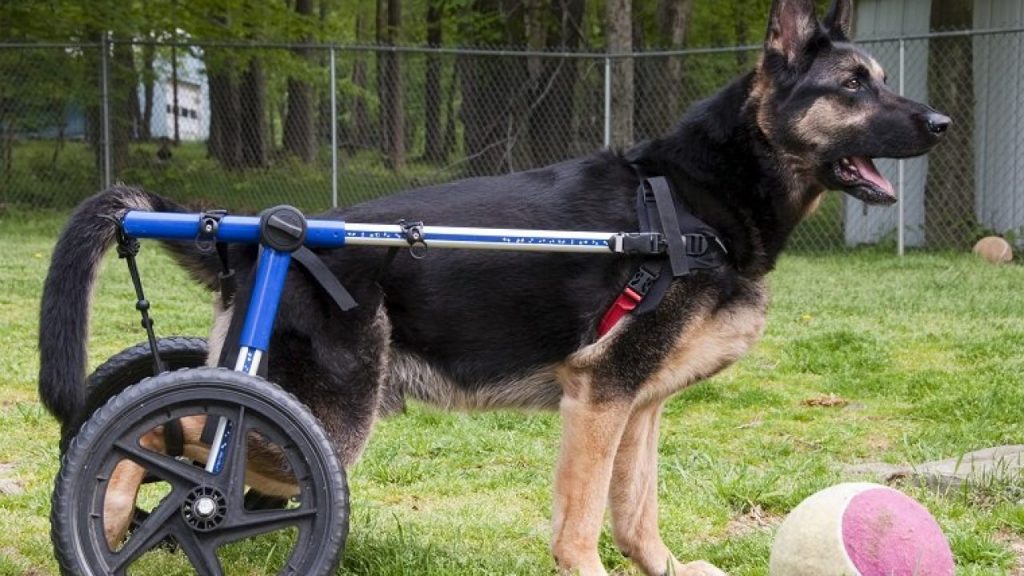
- The German shepherd dogs.
- The wire fox terriers breed.
- The pugs breed.
- The soft coated wheaten terriers breed.
- The poodles breed.
- The Rhodesian ridgebacks breed.
- The Bernese mountain dogs.
- The Shetland sheepdogs
DIAGNOSING DM IN DOGS
Fundamentally when the first sign occurs, every dog owner may see it like any other disease. Therefore a full physical examination is administered to the victim dog to determine the real cause of the limb weakness. The age of the dog, accompanied by a complete medical history and other considerations of the dog get taken.
A diagnostic test may be conducted, such as CT scans X-rays, cerebrospinal fluid (CSF), and MRIs. However, the only accurate method of diagnosing DM is the biopsy of the spinal cord. However, it’s not commonly performed before ruling out other potential diseases.
TREATMENT OF DEGENERATIVE MYELOPATHY
Ideally, there is no cure yet for the degenerative myelopathy. However, when the symptoms and signs of this dreadful disease appear, the dog owner may only help to provide and maintain a good quality life of the dog as the signs progress.
The dog owner may assist the dog in physical therapy. Also, thy can introduce special hind end harnesses, which in return will help your dog to walk without experiencing a lot of difficulties and also will prevent and control foot damage.
The dog owner may also increase the grip or traction by walking the dog through the grass and not on the concrete surface, also placing mats or rugs on the floors, which are slippery. These methods will suspend the need for euthanasia.
However, the dog owners should not lift the dog by their tails when they get diagnosed with degenerative myelopathy.
PREVENTING FEGENERATIVE MYELOPATHY IN DOGS
As I pointed out earlier, not every dog breed is prone to this terrible disease. Therefore selectively breeding the dogs is the only method to prevent degenerative myelopathy. However, whenever you want to be a dog owner, before purchasing the dog, inquire from the breeder to provide you the results of SOD-1 gene mutation testing on its parents, which shows that both have the normal gene.
A quick sneak peek: as a dog owner, it’s essential to monitor and check your dog carefully. Thus once you suspect that your dog is ill, don’t wait to call your vet immediately. Take a chance and time always to consult your veterinarian on any health-related problems after they have examined your pet. The vet knows your pet more and has its health history; therefore, they can provide a good recommendation for your pet.
CONCLUSION
As a dog owner, be keen while purchasing your dog; this will save you from getting dog breeds, which are high risk to degenerative myelopathy. In the article above, I have generally discussed MD, its signs and symptoms, how to treat it, and preventive measure. I hope it’s what you expected, and the article was educative and informative. Happy reading!
CBD Oil for Dogs: A Veterinarian Explains the Pros and Cons
The cannabis plant is not only a source of the drug, marijuana but also a good source of hemp. Cannabidiol (CBD) is an extract of hemp and comes with different benefits. CBD oil is an embraced pain reliever, antidepressant, and perfect treatment for acne. In human beings, the oil has numerous benefits in terms of health and wellbeing. For more than 1000 years now, the oil has been in use and the results are tremendous.
What about animals? Does CBD oil also work for them? Well, veterinary science has proved over time that the oil is also useful for treating different health and behavioral problems in animals, dogs specifically.
Is CBD Oil a Narcotic?
Given that the same cannabis plant is the source for both CBD and Marijuana, you may be wondering. Isn’t CBD a narcotic too? Can it make my dog high?
Well, the cannabis plant produces CBD and Tetrahydrocannabinol (THC). Marijuana has THC as part of its contents. Isolated CBD oil is not psychoactive while THC is. This means your dog won’t get high for using CBD oil as it is purely medicinal and non-psychoactive.
Another concern could be the legality of this substance. Is CBD oil legal? Yes, it is. CBD oil has nothing to do with illegal marijuana. It is an extract of hemp, which is a certified medicinal product.
In some states, medicinal marijuana has been legalized. Hence, the fact that CBD doesn’t have marijuana should give you another reason to believe that the oil is perfectly legal.
Is CBD Oil Good for Your Dog?
In the medical industry, you’ve probably heard about very useful medications that have extreme side effects. Would you choose the disease over the treatment’s side effects? Well, almost all treatments come with a little price to pay. What matters is the healing.
Is CBD safe for your dog? If you are curious about this, don’t be. Here is the answer. Yes, CBD oil is absolutely safe for your dog. Nevertheless, always introduce to your dog in small bits. Afterward, keep monitoring it for any possible side effects. Don’t get worried if your dog experiences a little drowsiness, dry mouth, vomiting, or increased appetite.
Eager to try CBD oils? Check out the official site for CBD products.

Pros of CBD Oil on Dogs
Cannabidiol (CBD) oil comes with amazing advantages. It can turn your dog’s life around. See how restless your dog is? CBD can change that in a matter of minutes. Here are other fantastic benefits of CBD oil on your dog. Check them out.
1. It Eases Anxiety
The endocannabinoid system of human beings has major similarities with that of dogs. With massive results that human beings have obtained from CBD oil, vets can now recommend it for dogs. Holistic vets will always recommend this oil to any dog showing symptoms of stress and anxiety.
CBD activates the endocannabinoid receptors, which in turn trigger chemical transmissions that urge the dog to calm down.
2. It Reduces Seizures
In most cases, anti-seizure drugs do not work for epilepsy. This is the case both in humans and animals. However, CBD oil has proved to make a great difference in terms of seizure frequencies. Any form of dog epilepsy that is resistant to medications is always managed by CBD.
3. It is an Anti-inflammatory Oil
With a busy dog that likes hunting, it can always come back home with multiple inflammations. Some may be as a result of minor accidents or allergic reactions at home. CBD oil has proved to be perfect for relieving inflammation in dogs.
4. It Alleviates Joint Pain
As your dog ages, its joints may become stiffer, causing pain and difficulty walking. Your dog may groan or bark as a sign of pain and discomfort. In most cases, drugs meant to manage Arthritic pain do not work. CBD oil is an excellent remedy for painful joints. Want to give your dog some relief? CBD is the best recommendation.
5. It Improves Appetite
Increased appetite is one of the major side effects of CBD oil in dogs. How about taking advantage of it? Some side effects are not bad after all. CBD oil is good for alleviating the appetite of a poor-eating dog.
6. It Relieves Digestive Problems
Is your dog passing a lot of gas? Is it bloated? CBD oil solves all digestive tract issues, ranging from indigestion to bloating.
7. It Improves Sleep
Your dog may be having troubled sleep due to different reasons. It could be stress, anxiety, etc. CBD oil will help calm it down and put it to deep sleep. It works even for human beings.

What are the Cons of CBD Oil on Dogs?
With the many advantages that CBD oil comes with, it also has a small pack of disadvantages. Read on.
1. It Causes Lightheadedness
You may notice your dog walking in zigzag pattern minutes after administering CBD oil. This is completely normal and it’s not something worth raising the alarm. A little rest may have your dog walking straight again.
2. It Can Make Your Dog Drowsy
Your dog may become kind of sleepy when on the CBD oil treatment. You just need to monitor and keep it resting. Some sleep will also improve this symptom.
3. It May Cause Tremors
Have you noticed your dog shaking lightly for a few seconds? This may result, especially if your dog is suffering from epileptic seizures. Tremors should not send you running up and down. Simply let your dog calm and they will disappear. You can also ask for advice from your vet.
Should You Use CBD on Your Dog?
From a vet’s point of view, you can use CBD oil on your dog. However, be very careful with the dosage. Always consult your vet before you administer any medication to your dog.
So far, the health benefits of the CBD oil on dogs are evidently more than the side effects. Besides, the side effects are few and minor. Hence, I would recommend that you treat your dog using the oil. Make sure you purchase pure CBD oil that has 0% THC to keep your dog sane. Otherwise, CBD oil is a dog savior.
Should You Try CBD for Your Pet?
Cannabidiol, or CBD, is one of the naturally occurring chemical compounds found in the hemp plant (cannabis sativa). CBD is often described as a non-psychoactive substance because, it doesn’t produce “high effects”; unlike another compound that can be found in the same plant, tetrahydrocannabinol (THC).
Should you try CBD on your pet, say a dog? We shall soon find out.
Scientific research on the therapeutic benefits of this cannabinoid is still at a very early stage. But so far, growing evidence suggests that CBD may be helpful in healing many conditions in your pet.
CBD is believed to be an effective pain killer, an anti-depressant, an anti-anxiety substance, and a cure for arthritis — just to name a few.
Out of their own curiosity, some pet owners have started administering CBD oils to animals in order to relieve them from their ailments.
Is CBD for pets the right way to go? Find the answers in the next headlines.
CBD for Pets: The Realities on the Ground
Of late, pet owners have been consulting their vets to find out more about the therapeutic value of CBD for pets. In fact, a 2019 veterinary survey found out that many vets get asked about CBD, at least once every 4 weeks.
The renewed interest in CBD for dogs has been sparked by the huge hype around CBD in general. After all, the idea is that if CBD is good for treating pain, anxiety, epilepsy and arthritis in humans— why can’t it be used to treat the same conditions in pets?
It turns out the situation is a bit complex than we thought. The problem is that, in many places, CBD for pets hasn’t received the required legal backing.
While the legality of CBD for humans had broken down barriers in the United States and other places, veterinarians have not been given the green light to prescribe CBD for pets.
Do federal restrictions completely stop people from experimenting CBD for dogs? Hell no!
CBD pet products, in the form of tinctures and capsules, are already out there on the market. Even though vets are not supposed to be openly suggesting CBD for pets, they can discuss the subject if clients approach them.
Eager to try CBD oils? Check out the official site for CBD products.
In the state of California, experts have confirmed that legislation permits vets to discuss CBD matters with their clients.
As pet lovers keep going crazy about CBD, they must understand that their veterinarians may not have researched much into cannabis oils for animals. Some vets actually think that CBD pet products come with risks. Even though side effects may be uncommon, CBD does interact with other veterinary medicines.
There are reports that some animals have suffered ill-health after taking contaminated or expired CBD compounds.
In other instances, some pets appeared to exhibit “high effects” after taking CBD. In theory, the high feelings should not have occurred unless the CBD had way more THC content than was required.

CBD Products for Pets: The Bottom Line
It’s important to note that researchers are yet to confirm the therapeutic benefits of CBD for pets. When it comes to CBD research, physicians have the upper hand over veterinary officers.
Cannabis laws vary from region to region. So, it’s advisable to be mindful of the products you buy for your pets; the CBD market for pets still operates under the cover of darkness.
That said, here are 3 things you should do when you want to try some CBD products for your pets:
- Consult a veterinarian. Even if CBD is legal in your region, consult a vet before trying it on your pets.
- Watch out for contaminated CBD products.
- Ask for Certificate of Analysis (COA). This will give you an idea about the laboratory test results for the specific products.
- Start with minimal doses before scaling up.
5 Alternative Benefits For Your Pet You May Not Know
Throughout the ages, man has conquered, fought, died, and loved. During this entire time, he has had the love and respect of animals by his side. Fast forward to today, pets are still a common attribute of the American family. No home is complete without a loving animal waiting to greet you when you come home from work. However, some families are disregarding their responsibilities to their pets.
If you are someone who has been looking for better options for your pets to stay happy, healthy, and balanced, there are many alternative solutions you may not have heard of yet. This article is going to talk about five alternative benefits our experts recommend for your pet to stay balanced and centered and live a happy, healthy lifestyle. One thing we know for certain, a pet who is unbalanced creates unbalance in the home and when you can police this aura of balance you can manipulate the way your pet feels every day which is powerful.
#1 – Acupuncture
You have more than likely heard of acupuncture before. This Western medicine practice has become extremely popular among people who want to alleviate symptoms without having to consume harmful medication. However, there is acupuncture for pets as well. This alternative benefit has so many useful properties you should consider for your pet who is dealing with different issues in its life.
For instance, acupuncture (needle pressure point applications) has been known to help animals with joint pain, depression, anxiety, and encourage faster healing after a trauma has occurred in their life. One of the downsides of acupuncture is that it is very expensive. However, the results are tremendous and possibly something you should consider in a worst case scenario as many pet owners testify to this method.
#2 – Water Therapy
Another useful tool in alternative benefits for your pet is something called hydrotherapy or water therapy. Essentially, it is physical therapy for your pet in the water and is found useful in older pets who are having a hard time walking, pets who have had traumatic experiences and can’t walk anymore or have sore joints or muscles. Water therapy has been known to improve the movement in the joints and muscles of the pet undergoing this procedure. Overall, many pet owners simply use water therapy because they cannot exercise their animal every day of the week. Water therapy allows your pet to get a strenuous exercise and keep them in great shape as well.

#3 – Try CBD For Pets
One of the fastest growing trends in America today is a product called CBD oil. CBD, or cannabidiol is found primarily in the hemp plant and is cultivated and harvested mainly for the cannabinoids which are found in this plant. CBD is one of over one hundred cannabinoids which are found in the hemp plant and all of these cannabinoids work together to attach to the endocannabinoid system which is found in both humans and animals.
Since the legalization of hemp with the Farm Bill of 2018, many people have been benefitting from the power of CBD. Not only that, but now pets also have the opportunity to benefit from this powerful plant as well. It’s important to learn more about CBD for pets if you’re someone who is serious about maintaining a health and wellness regimen in your pets life. CBD is truly a magical plant that has many benefits for both animals and humans alike. While you’re at it, get yourself some CBD oil as well and both of you can enjoy a balanced life.
#4 – Pet Massage
One of the ailments that plagues most pets is arthritis. You can see it clearly in a pet who suffers from it because it can eliminate their wellbeing almost immediately. Your pet doesn’t want to walk, when it does walk you can see that there is pain when they do walk. One of the first things you want to do is take your pet to get some sort of medicine. In reality, research scientists says when this happens, you should try a pet massage first because it comes with a wealth of benefits for your animal.
In your pet, a massage encourages faster healing because it causes the blood to flow better, it relaxes muscles, and releases stress, and creates a sense of well-being in your pet. While some pet owners would rather take their animal to a licensed massage therapist, the cost accrued can be upwards of $120/session. Take some time to get to know how and where to massage your animal and do it yourself. You should start to see results immediately. A massage is a great alternative to harmful medications your pet would be taking otherwise.

#5 – Love and Affection
There’s a song that describes the “power of love” and no truer words have been spoken. Scientific research claims that when a pet owner shows love and affection to their pet, endorphins are released and your pet bonds even closer with them. People who tend to leave their pet in the backyard for days at a time without interacting with their pets will eventually see their pets physical and mental dexterity go downhill very quickly. The easiest way to maintain your pets health, wellness, and balance is to show them love and affection every day. Take 30 minutes out of your day to spend some time with your pet to get the maximum benefits of this bonding experience.
Alternatives For The Win
When you begin to learn the best alternative solutions for your pet you begin to understand there are lots of things that aren’t that great for them. Be more proactive in your search for wellness and alternative resources that your pet can come in contact with. Overall you will start to see a pet that is more in tune with nature and doing what Mother Nature intended, to live free and balanced. Truly, this is our responsibility, to ensure our pets are well and happy.
5 Ways Your Dog May Be Improving Your Heart Health!
Have you thanked your dog for improving your heart health? Maybe it is time that you did.
Modern research at the intersection of dog ownership and cardiovascular health suggest that just by bringing a dog into your life, you may be experiencing some major gains in terms of your overall health. Since heart disease is the leading cause of death in the United States, maybe it is time to take a closer look at the ways that our canine companions may be having a major impact on this important aspect of human health.
#1: Lower Blood Pressure and Heart Rates
One of the most well known and well researched facts about dogs and human cardiovascular health is that dogs lower both blood pressure and heart rates. This effect has been duplicated in numerous scientific studies.
This is both a short term effect (when heart rate and blood pressure are lowered during spending time petting or playing with a canine) and a long term effect (that is, dog owners have a lower average HR and BP than those that don’t have dogs in their lives).
Given that these two factors are key to heart health, we can be thankful for this benefit of dog ownership towards improving our wellbeing and overall health.
#2: Lower Stress Levels and Higher Stress Resiliency
Medical professionals concerned about heart health often talk about stress management as one of the key lifestyle factors to watch out for when trying to lower risk for cardiovascular disease.
This can be understood in two major ways: 1. Lowering baseline stress levels measured by the hormone cortisol in the bloodstream and 2. Increasing resiliency after stressful triggers which means to recover faster after you are triggered by a stressful event.
Research on the human-animal bond has shown that dogs profoundly lower our stress levels in both of these key ways. That is, when hormone levels are measured, people show lower cortisol (the stress hormone) and higher oxytocin (a calming hormone) after time spent with dogs.
And, dog owners appear to be reaping the stress reducing benefits of dog ownership in a cumulative way as well. Research has shown that they have lower levels of stress and higher levels of stress resiliency overall than those who don’t have dogs in their lives.

#3: Lower Levels of Cholesterol and Triglycerides
Although there are only a few studies looking at this aspect of dog ownership and heart health, there is some research that suggests dog ownership helps to promote a heart healthy lipid profile, that is, lower levels of both cholesterol and triglycerides.
Of course, it is important to not overstate this effect, as changes in lifestyle such as a healthier diet and more exercise are likely to have a much bigger effect than dog ownership. Still, it is worth noting this important finding!
Researchers believe that a better lipid profile for dog owners may be due to a combination of several factors, including the next item on our list: Dog owners get more exercise.
#4: Higher Levels of Exercise
Everyone knows that our dogs need exercise, read more here. Of course, so do humans. Unfortunately, getting motivated to incorporate adequate exercise into our lives can be difficult. After all, we are all busy and our modern day schedules don’t seem to leave a lot of room for the extra time and energy we need to stay fit.
Luckily for dog owners, those big brown hopeful eyes at the door when it is time for that daily walk can get us outside to enjoy a walk and some fresh air even when we might rather just sit on the couch and watch the game.
In fact, research has shown that dog owners do get more exercise than their non-dog owning counterparts and several researchers have suggested that this difference may have a significant positive impact on the heart health of people who have dogs in their lives.

#5: Better Recovery from Heart Attack and Stroke
Dogs impact on heart health may be so significant that it is saving lives. In a recent large scale study of patients who suffered heart attack or strokes, researchers found a surprisingly large correlation with better recovery from these cardiac events. The results of the study showed that people who own dogs had significantly higher survival rates after heart attack and stroke, as well as lower levels of re-hospitalization.
Dog lovers don’t really need more reasons to love dogs – their unconditional love, loyalty, and ability to bring us comfort during hard times is enough.
However, just in case you were looking for another reason to spoil your little furry friend with the best toys and best dog food that you can find, the fact that they are helping you stay heart healthy may be just the excuse you are looking for!